Choosing the best Tower Cranes for global buyers requires more than comparing lifting capacity or purchase prices. Grand View Research estimates that the global tower crane market will continue expanding through the decade, driven by urbanization, transport infrastructure, and high-rise construction. Mordor Intelligence also reports steady market growth, although published estimates differ by methodology. That difference matters. Buyers should question impressive numbers.
The strongest choice usually balances load charts, working radius, erection speed, transport dimensions, wind performance, and service support. A 12-ton crane may look powerful, yet it can become inefficient on a congested site with narrow access roads. Picture a downtown project: limited storage, changing floor heights, and trucks arriving during restricted delivery hours. Here, modular sections and responsive technicians may matter more than maximum capacity.
Dr. David J. MacCollum, a recognized crane-safety specialist, offered a practical warning: “A crane’s rated capacity is not a license to ignore site conditions.” His point remains highly relevant for international procurement. Buyers must examine operator training, spare-parts availability, inspection records, and regional standards before signing contracts. ISO 4301 classifications, local lifting regulations, and manufacturer documentation should align.
There is no universal winner.
Liebherr, Potain, Zoomlion, XCMG, and other established manufacturers serve different project realities. Some offer advanced controls and strong resale value. Others compete through pricing, customization, or regional support. The difficult truth is that a cheaper crane may cost more after delays, unavailable parts, or weak technical assistance. This guide compares leading Tower Cranes through evidence, field practicality, and long-term ownership risk. The final recommendation may be less perfect, but it should be defensible.

What Defines a China Tower Crane for Global Construction?
A China tower crane is defined by engineering discipline, not country of origin alone. Its value depends on lifting capacity, jib reach, hoisting speed, and stability under changing loads. Grand View Research estimated the global tower crane market at about USD 8.3 billion in 2023. This growth increases pressure on manufacturers to provide measurable performance, not attractive specifications.
Site conditions reveal the real difference. A coastal project may need stronger corrosion protection, sealed electrical cabinets, and wind monitoring. A dense urban project may require precise slewing control and compact foundation design. EN 14439 and ISO 12480-1 provide useful references for crane safety, operation, and inspection. However, compliance documents do not replace factory quality records, weld inspections, or load testing. That assumption is too simple.
Operational support also defines the product. Global buyers should examine spare-parts response times, multilingual manuals, technician training, and remote diagnostics. The International Labour Organization emphasizes competent operators, planned lifting, and regular equipment inspection. These requirements affect productivity as much as motor power. A 2024 market assessment by Fortune Business Insights projects continued tower crane expansion through 2032, driven partly by urban construction and infrastructure investment. Yet forecasts can miss local realities. A crane that performs well in a factory test may struggle with poor site access, unstable power, or weak maintenance routines. Careful buyers compare verified data, field references, and total operating cost before selecting equipment.
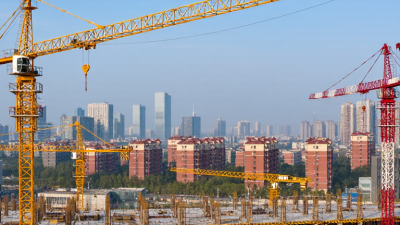
Choosing the right China tower crane depends on the project, not simply the lifting capacity. Flat-top tower cranes suit residential towers, industrial buildings, and sites requiring several cranes to work nearby. Their simple boom design can reduce interference between operating zones. Hammerhead cranes offer strong horizontal coverage for dense construction sites. They work well when materials must travel across a wide footprint.
Luffing-jib cranes fit urban projects with limited airspace. Their jibs can rise steeply, helping avoid nearby buildings, roads, and airport restrictions. Self-erecting tower cranes are practical for smaller projects, renovation work, and locations with limited assembly space. However, their compact size may limit lifting height and reach. Space changes everything. A higher capacity does not always mean better performance.
Tips: Compare the real load chart, not the headline capacity. Check maximum radius, tip load, wind limits, foundation loads, power requirements, and transport dimensions. Ask for inspection records, operating manuals, spare-parts support, and clear technical drawings. Local engineers should verify site conditions and applicable safety standards before installation. In my experience, buyers often focus on price first and discover logistics later. That approach needs reconsideration. A crane that arrives late, needs unusual power, or lacks trained service support can delay an entire project. Consider the heaviest common load, not only the occasional maximum lift.
| Tower Crane Type | Typical Maximum Load | Typical Maximum Jib Length | Typical Maximum Free-Standing Height | Typical Hoisting Speed | Best-Fit Project Requirements | Main Advantages | Key Limitations | Important Buying Checks |
|---|---|---|---|---|---|---|---|---|
| Self-Erecting Tower Crane | Approximately 4–10 tonnes; commonly 1–2 tonnes at the outer jib end | Approximately 20–45 m | Approximately 15–35 m without significant structural extension | Approximately 30–60 m/min, depending on load and configuration | Low- to mid-rise housing, small commercial buildings, bridge maintenance, precast installation and projects with limited site space | Fast deployment, relatively low transport and assembly requirements, compact site footprint | Limited height, radius and lifting capacity compared with conventional tower cranes | Check road-transport dimensions, setup time, ground bearing pressure, power supply and availability of remote controls |
| Hammerhead Tower Crane | Approximately 5–25 tonnes; commonly 1.5–5 tonnes at maximum radius | Approximately 40–80 m | Approximately 40–80 m free-standing; greater heights may require tie-ins | Approximately 40–120 m/min, depending on the hoist configuration | High-rise residential buildings, industrial facilities, infrastructure works and general construction requiring strong lifting performance | Proven configuration, high load capacity and good suitability for heavy or repetitive lifting | The tower head and tie bars require more assembly space and may create clearance issues on congested sites | Verify maximum and tip-load charts, tower-section compatibility, tie-in design, foundation reactions and anti-collision options |
| Topless or Flat-Top Tower Crane | Approximately 5–25 tonnes; commonly 1.5–5 tonnes at maximum radius | Approximately 40–80 m | Approximately 40–80 m free-standing; greater heights may require tie-ins | Approximately 40–120 m/min, depending on load and reeving | Multi-crane projects, urban construction, logistics yards, commercial buildings and sites where crane overlap is unavoidable | Lower overall headroom, easier transport of the upper structure and improved suitability for overlapping cranes | Requires careful structural and lifting-plan coordination because the tower head provides less clearance than a hammerhead design | Check mast-section interchangeability, trolley travel, anti-collision integration, wind limits and overlap-management controls |
| Luffing-Jib Tower Crane | Approximately 5–25 tonnes; commonly 2–6 tonnes at shorter working radii | Approximately 30–60 m, with an adjustable working radius | Approximately 50–100 m free-standing or tied, subject to tower design and local regulations | Approximately 40–100 m/min; luffing speed is commonly about 30–60 m/min | Dense urban sites, tall buildings, narrow plots, airports, refineries and projects requiring a small out-of-service radius | Excellent control of the working and out-of-service radius; well suited to restricted airspace and neighboring buildings | Higher purchase and maintenance complexity, with more demanding operator training and installation procedures | Review luffing-cycle time, emergency lowering provisions, wind-management requirements, counterweight arrangement and control-system standards |
| Internal-Climbing Tower Crane | Approximately 5–20 tonnes, depending on the crane model and climbing frame | Approximately 40–70 m | Designed to climb within or near the building as construction progresses | Approximately 40–100 m/min, depending on rated load | Very tall buildings where external tie-ins are restricted or where the crane must remain inside the building core | Can reduce external facade obstruction and adapt to the increasing height of a high-rise structure | Requires detailed structural coordination, temporary openings, climbing operations and removal planning | Confirm building-core dimensions, climbing-frame loads, floor-opening requirements, hydraulic systems and dismantling methodology |
| Travelling Tower Crane | Approximately 5–20 tonnes; capacity depends on rail spacing and jib radius | Approximately 40–70 m | Approximately 30–60 m free-standing or tied | Approximately 40–100 m/min, with separate travel speed along the rails | Long linear projects such as tunnels, bridges, industrial plants, shipyards and large construction sites with repeated lifting zones | Covers a long work area without relocating the foundation or repeatedly dismantling the crane | Needs accurately designed rails, end stops, travel clearances, rail foundations and regular alignment inspections | Check wheel loads, rail gauge, travel controls, emergency brakes, power-collection method and site drainage around the rails |
Note: The figures shown are representative industry ranges for preliminary comparison only. Actual capacity, height, radius, speed, wind limits and foundation loads vary by model, mast configuration, reeving, local regulations and project conditions. Final selection should be based on the manufacturer’s load charts and a project-specific engineering review.
For global buyers, the best China tower crane is not always the largest model. Capacity must match the real load chart, radius, and lifting cycle. A crane lifting 8 tonnes at 20 metres requires about 160 tonne-metres of load moment. At 50 metres, a 3-tonne load already requires 150 tonne-metres. Small changes matter. Buyers should request certified load charts, not rely on maximum headline capacity.
Height needs equal attention. A freestanding crane may suit a low-rise project, while a taller structure may require climbing frames, mast sections, and building ties. The installation plan should show every tie location and the final hook height. Wind data is also essential. Local design rules can differ sharply, and operating limits must come from the manufacturer’s calculations and the appointed engineer. OSHA’s crane requirements, including ground-support provisions in 29 CFR 1926.1402, show why soil assessment cannot be treated as paperwork.
Site compatibility includes foundation bearing pressure, road access, power supply, assembly space, and nearby structures. The 2023 Global Status Report for Buildings and Construction reported that buildings and construction consumed 34% of global energy and produced 37% of energy-related emissions. Efficient logistics therefore deserve practical attention, not just environmental language. A compact crane may reduce transport movements and setup time, but it may sacrifice reach. Buyers should compare transport dimensions, component weights, erection time, and spare-part support. I would also challenge one common assumption: a higher capacity rating does not guarantee better productivity. A poorly matched crane can spend hours repositioning, waiting for wind, or working outside its efficient radius.
Global buyers should judge tower cranes by documented safety performance, not lifting capacity alone. Ask for complete load charts, structural calculations, welding records, and component traceability. A reliable manufacturer should explain how each model handles wind, overload, emergency stops, and power failure. Anti-collision systems also deserve close attention on crowded urban sites. Small software gaps can create serious risks.
Check applicable standards before comparing certificates. Chinese tower cranes may reference GB/T 5031 and GB/T 5144. Projects in Europe may require EN 14439 alignment and CE conformity. Other markets may request local electrical, lifting, or workplace approvals. A certificate is useful only when its scope matches the exact crane configuration. Verify the issuing body, test date, serial number, and inspection records. Never rely on a logo alone.
Quality becomes clearer during factory and site inspections. Look for consistent welds, protected cable routes, sealed control cabinets, and readable safety labels. Request factory acceptance testing with a recorded load test and emergency-stop test. After delivery, trained technicians should inspect bolts, pins, brakes, and foundation anchors. I have found that paperwork can look perfect while maintenance instructions remain vague. That should prompt questions, not immediate rejection. A rushed installation is still a weakness, even with excellent equipment. Human judgment matters.
What Are the Best China Tower Cranes for Global Buyers?
Global buyers should compare suppliers through total cost, not factory price alone. A 2024 construction workforce survey reported that 94% of contractors struggled to fill craft positions. This makes operator training and remote technical support commercially important. Ask for load charts, test certificates, component origins, and documented factory inspections. Then verify whether the supplier can provide manuals in your working language.
Freight often changes the final calculation. The World Bank’s 2023 Logistics Performance Index assessed 139 economies, showing major differences in customs, tracking, and delivery reliability. Request a landed-cost quotation with packing, inland transport, insurance, port fees, taxes, commissioning, and spare parts included. Compare delivery promises against previous shipment records. A low quote can still be the wrong decision. Not always.
Tips: Request a three-year ownership model. Include electricity use, lubrication, inspections, training, and downtime. Check the spare-parts list before signing. Ask for response times, local technician coverage, warranty exclusions, and escalation contacts. A useful contract should define parts availability, not merely mention “after-sales service.” On real projects, the first failure is often communication, not steel. This is easy to underestimate. Suppliers offering live diagnostics may reduce delays, but buyers should confirm data access, cybersecurity controls, and technician competence. The best crane is therefore the one with transparent evidence, predictable support, and a cost model that survives difficult site conditions.
Indicative FOB China purchase costs by maximum lifting capacity, with key supplier-comparison factors for international buyers.
Larger lifting capacity generally increases the crane price, transport requirements, installation complexity, and spare-parts inventory. Global buyers should compare more than the initial quotation: verify applicable certifications, technical documentation, delivery lead time, warranty coverage, remote troubleshooting, local service partners, and the availability of critical components. The figures are practical planning benchmarks in USD and should be confirmed through project-specific quotations.
Planning benchmark: typical new flat-top or luffing-jib tower crane configurations, excluding inland delivery, foundation works, taxes, installation, and commissioning.