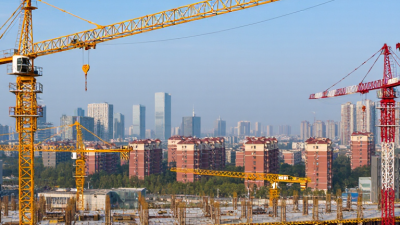
Choosing the right tower crane in 2026 starts with the jobsite, not a popularity ranking. Building height, lifting radius, load weight, ground conditions, and available space all affect which configuration is suitable. A crane that performs well on an open site may be impractical beside existing buildings or under restricted airspace. Tower Cranes also differ in how they are assembled, climbed, and operated, so early planning can prevent costly changes later.
Small details matter.
Flat-top cranes can simplify assembly where several cranes work close together. Hammerhead models offer a familiar arrangement for many building projects. Luffing-jib cranes can suit dense urban sites, where a jib that moves vertically may help limit oversailing. Self-erecting cranes can be useful for lower-rise work with tighter setup needs. These are general comparisons, not guarantees: model capacity, site layout, and manufacturer requirements remain decisive.
No type is universally best.
This guide compares the main tower crane types and explains where each may fit. It also considers lifting capacity, reach, erection needs, operating costs, and project duration. Capacity charts and site-specific lift plans should be reviewed by qualified professionals; headline capacity alone does not show what a crane can safely lift at every radius. Confirm technical details with the manufacturer and project team. Even careful comparisons have limits: weather, changing site conditions, and delivery access can shift the decision. Use the options here as a starting point, then test them against the real jobsite before choosing.
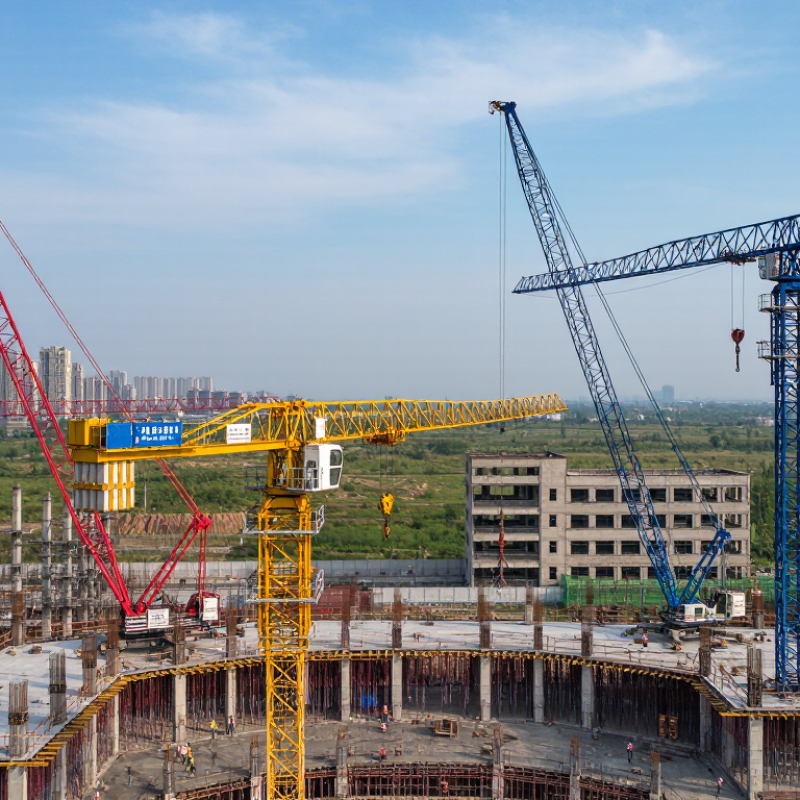
A tower crane is a tall lifting machine designed to move materials across a building site. Its mast is secured to a foundation or a prepared structural support. At the top, a slewing unit rotates the crane. The horizontal jib carries a trolley that travels inward or outward, while a hoist raises and lowers the load. These movements let the operator place materials at different heights and distances.
The crane’s rated capacity changes with the trolley’s position. A load near the jib tip may be limited, even when the same load is acceptable closer to the mast. Operators use load charts and site signals to guide lifts. Some cranes can be raised with climbing equipment as a building grows. On paper, the sequence looks simple; on a busy site, coordination is less neat. Wind, delivery timing, and nearby structures can all affect a lift.
Tips: Check the crane’s load chart, ground or support conditions, and planned lifting path before work begins. Keep communication clear between the operator and signal person. Pause if conditions change. Small details matter.
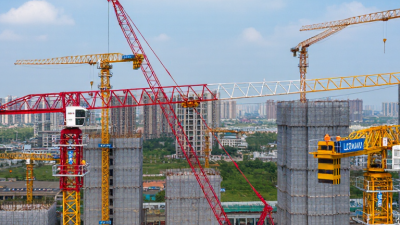
In 2026, common tower crane choices include hammerhead, flat-top, luffing-jib, and self-erecting models. Hammerheads suit open sites, where the horizontal jib can swing freely. Flat-top cranes simplify assembly and work well when several cranes share a crowded skyline. Luffing-jib cranes raise their jibs steeply, reducing oversailing above nearby buildings. Self-erecting cranes are compact and useful for low-rise projects with limited setup space. Each type has trade-offs.
CTBUH’s 2023 Year in Review recorded 100 buildings of at least 200 metres completed worldwide. That sustained tall-building activity helps explain demand for high-capacity cranes, but height alone should not decide the model. Check the heaviest load, lift radius, hook height, ground conditions, and available assembly space. A 10-tonne lift near the mast is not the same as a 10-tonne lift at the jib tip.
A practical error is choosing by maximum lifting capacity alone. A luffing jib may suit a tight city site, yet cost more to install and operate. A hammerhead may offer efficient coverage, but needs clear swing space. Wind exposure, climbing plans, and delivery access also affect the choice. Small details matter. I would verify the crane layout against the actual lift schedule; early estimates can miss awkward picks.
Tower cranes differ mainly in jib design, lifting capacity, and how they fit a site. A hammerhead crane uses a horizontal jib and trolley, making it practical where several work zones need coverage. A luffing-jib crane raises its jib to reduce the space it sweeps through. That helps on crowded urban sites, though its setup and operation can be more demanding.
Flat-top cranes have no tall apex above the jib, which can simplify climbing and allow cranes to work near one another. Self-erecting cranes suit smaller projects and quicker setup, but their reach and lifting capacity are usually more limited. Capacity changes with radius: a crane may lift a heavy load close to the mast, then much less near the jib tip. Check the manufacturer’s load chart and site conditions, not just the headline capacity. Wind exposure, ground support, building height, and delivery access also affect performance. One detail is easy to miss: a crane that fits the drawing may still complicate deliveries.
Tips: Mark the heaviest planned loads and farthest pick points on a site plan. Compare those needs with the load chart, then review clearance and wind limits with a qualified lifting professional. Leave room for adjustment; early estimates are often imperfect.
Hammerhead tower cranes suit large, relatively open sites such as warehouses, factories, and broad residential developments. Their horizontal jibs provide useful coverage for moving steel bundles or concrete buckets across a clear work zone. They work best when the crane can stay in one position and nearby structures do not restrict rotation. Room matters. Check the hook radius against the heaviest planned lift, not just the building footprint.
Luffing-jib cranes are often a better fit for dense city projects, where neighboring buildings, roads, or other cranes limit swinging space. Their jibs rise to reduce oversailing, but the crane may lift more slowly as the jib angle changes. A flat-top crane can help on sites using several cranes, since its unobstructed top makes overlapping operations easier to plan. Still, coordination depends on experienced operators and clear lift procedures; the crane type alone cannot prevent conflicts.
Self-erecting tower cranes suit low-rise housing, schools, and smaller commercial projects with frequent, moderate lifts. They can be practical where a large mobile crane has limited access, though their capacity and working height are more restricted. Not always. I would compare actual delivery access, foundation conditions, wind exposure, and lift schedules before choosing. Early estimates can miss awkward details, like a narrow gate or a roof plant room that blocks the final jib position.
Choosing the right tower crane starts with the work, not the tallest model on a chart. List the heaviest load, its lifting radius, hook height, and how often each lift will happen. A 6-tonne load near the mast can demand less capacity than a smaller load at the far end of the jib. Check the crane’s load chart at the exact radius. Do not rely on its maximum headline capacity.
Then match the crane to the site. A flat-top model may suit a crowded skyline, while a luffing-jib crane can reduce jib oversail on tight urban sites. But that does not make either option automatically right. Check ground-bearing capacity, foundation design, access for delivery, assembly space, and the planned dismantling route. Wind exposure matters too. Ask a qualified crane engineer to review the lift plan and site conditions.
Tips: Measure twice. Record load weights, lifting points, and delivery dates. Compare climbing and tie-in requirements with the building sequence. Confirm operator sightlines and communication methods before work begins. Keep the load chart available on site.
I would also compare total project cost, not just rental rates. Assembly, power, inspections, and downtime can change the calculation. Site plans often shift; leave room for that. Recheck crane selection if the building height, load, or schedule changes.