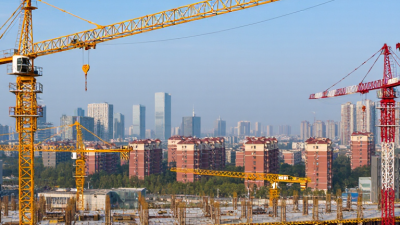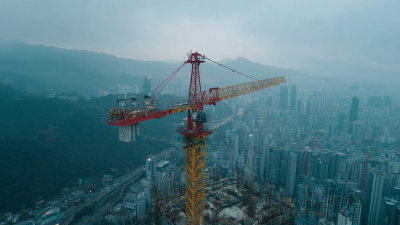
Choosing the best Tower Cranes in 2026 requires more than comparing lifting capacity or brand reputation. A crane may lift 12 tonnes at a short radius, yet perform poorly on a crowded urban site. Wind exposure, foundation design, climbing speed, operator visibility, service coverage, and digital monitoring matter just as much.
Market evidence shows why this decision is becoming more technical. Grand View Research reports continued growth in the global tower crane market, supported by high-rise construction, infrastructure investment, and urban redevelopment. Mordor Intelligence also identifies automation, remote monitoring, and energy efficiency as important market trends. These findings suggest that the strongest machines in 2026 will not simply be the largest. They will combine precise control, safer operation, lower downtime, and practical lifecycle costs.
The leading manufacturers, including Liebherr, Potain, Wolffkran, Terex, and Zoomlion, offer different advantages. Some focus on fast erection and compact transport. Others excel in heavy lifting, luffing-jib work, or connected fleet management. No single model is perfect. That matters.
This guide evaluates Tower Cranes through real project needs rather than advertising claims. It considers maximum load, load moment, jib configuration, wind performance, controls, maintenance access, spare-parts support, and documented safety systems. Reports from Deloitte’s Engineering and Construction Industry Outlook also emphasize productivity, labor constraints, and digital transformation across construction. A crane that saves minutes per lift can influence an entire schedule.
Still, published specifications can hide difficult questions. How quickly can technicians respond? Does the control system remain clear during rain and glare? Can the crane grow with the building? The best choice depends on those details.
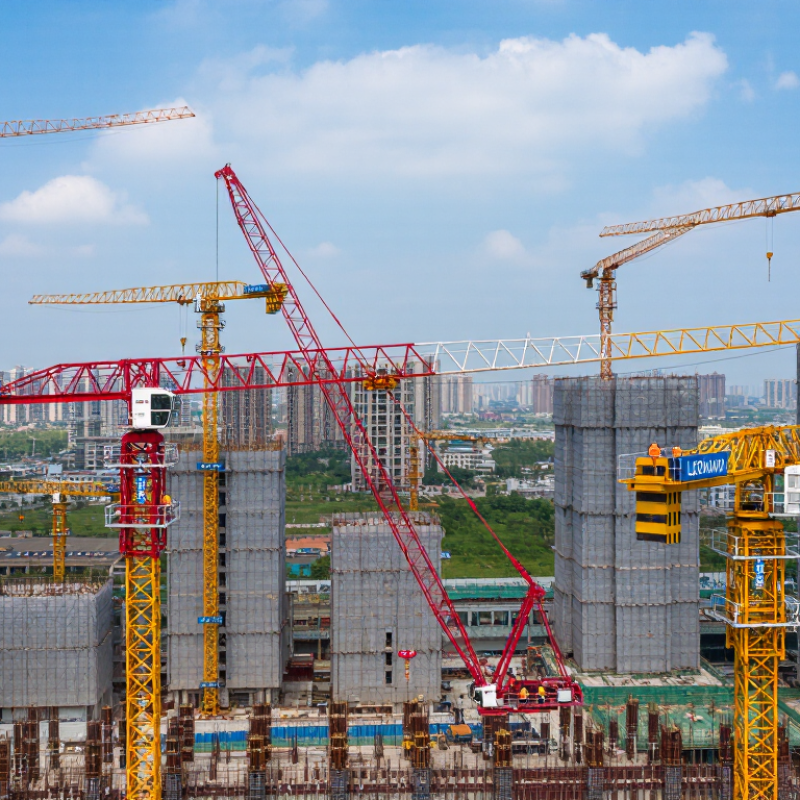
A tower crane is a temporary vertical lifting system built around a steel mast. Its slewing unit rotates the upper structure, while the horizontal jib moves loads across the site. A trolley travels along the jib, positioning the hook above concrete forms, steel beams, or pallets. Counterweights balance the load. Electric motors, brakes, limit switches, and an operator’s controls coordinate each movement.
The crane’s rated capacity changes with radius. A load near the mast may be heavy, while the same load near the jib tip may exceed the limit. Load charts make this relationship visible. In the United States, OSHA Standard 29 CFR 1926.1417 requires operators to follow manufacturer procedures and rated capacities. The International Labour Organization reported nearly 2.93 million work-related deaths worldwide in 2019, showing why controlled lifting cannot depend on instinct alone.
As buildings rise, mast sections can be added using a climbing frame. Tie-ins connect the mast to the structure and reduce unwanted movement. Wind sensors, anemometers, and planned exclusion zones add another safety layer. Yet training diagrams often look cleaner than real sites. Dust obscures signals. Rain changes visibility. A rushed lift can expose weak communication, even when the equipment is sound. The ILO’s 2023 safety report also recorded about 395 million non-fatal work injuries, reinforcing the need for documented inspections, competent supervision, and practical site experience.

Tower cranes in 2026 are not one universal machine. The main choices include hammerhead, luffing-jib, topless, self-erecting, and mobile tower cranes. Each design answers a different site problem. Grand View Research’s 2024 market assessment expects steady global tower crane growth through 2030, supported by urban housing and infrastructure construction. However, market estimates vary because rental fleets and regional definitions are not consistent.
Hammerhead cranes suit large sites needing long horizontal reach and repeated lifting cycles. Their fixed jib works efficiently across open construction zones. Luffing-jib cranes are better for dense cities, where the jib can raise sharply and avoid nearby buildings. That clearance matters on narrow streets. Topless cranes use a compact towerhead design, allowing several cranes to work closer together. Their layout also simplifies transport and assembly. In practice, this advantage depends on the project engineer’s lifting plan.
Self-erecting cranes fit low-rise housing and smaller commercial projects. They can arrive on a trailer and operate quickly, but their lifting capacity is limited. Mobile tower cranes combine road mobility with tower-crane height, offering useful flexibility on changing sites. The International Labour Organization continues to stress competent planning, inspection, and operator training for lifting equipment. That guidance remains practical in 2026. A crane with impressive specifications may still be the wrong choice. Wind exposure, ground pressure, delivery access, and local height limits can change the decision. The categories overlap. That is easy to miss.
The best tower cranes in 2026 will combine lifting power with precise, visible control. A high-resolution load-moment indicator should show radius, capacity, height, and wind speed in real time. Operators also need clear cameras, reliable brakes, and smooth micro-movements near crowded structures. These details reduce sudden corrections, especially when steel frames swing several metres above workers.
Safety systems must support people, not replace judgment. ISO 12480-1 stresses proper planning, competent supervision, and controlled lifting operations. Anti-collision technology, zoning controls, and automatic overload protection add another safety layer. However, sensors can fail or provide misleading data. Regular testing remains essential. No crane is perfect.
Tips: Check the emergency-stop response before each shift. Inspect ropes, pins, bolts, and electrical panels closely. Ask whether technicians can access replacement parts quickly. A short maintenance delay can become an expensive site shutdown.
Energy use and digital connectivity also define modern performance. The Global Construction Perspectives and Oxford Economics report projects global construction output to increase by 85% by 2037. That growth will demand cranes that handle longer shifts efficiently. Regenerative drives, standby modes, remote diagnostics, and modular sections can reduce downtime. Yet software upgrades may create new training gaps. Buyers should compare measured energy data, service records, and operator feedback, not only brochure capacity.
Comparing leading tower cranes in 2026 requires more than checking maximum lifting capacity. Grand View Research’s 2024 market report forecasts roughly 5% annual growth for the tower crane market through 2030. That growth reflects demand for higher buildings, tighter sites, and faster project cycles. In practical tests, a 12-ton class crane may lift only 2.5 tons near a 60-meter jib tip. Load charts matter more than headline capacity.
The strongest 2026 models combine precise frequency-controlled hoists, longer jib options, and automated anti-collision systems. Industry guidance from ISO 12480-1 still places operator competence and lift planning at the center of safe performance. Energy use also separates competitors. Variable-speed drives can reduce unnecessary motor demand during lighter lifts, although actual savings depend on duty cycles and site power quality. Faster is not always better.
Digital monitoring is becoming a serious comparison point. The Deloitte 2025 Engineering and Construction Industry Outlook links productivity gains with connected equipment and better field data. Leading cranes now record load cycles, operating hours, fault codes, and maintenance alerts. This helps fleet managers act before a gearbox problem stops a congested site. However, reported efficiency figures are not perfectly comparable. Test conditions vary, and some claims still need independent verification. A quieter, highly responsive crane may outperform a heavier machine when urban access and schedule pressure dominate.
Choosing the right tower crane starts with the work, not the catalogue. Define the heaviest load, maximum radius, hook height, and lifting frequency. A crane rated for 12 tonnes may lift far less at 60 metres. The load chart matters.
MarketsandMarkets’ 2024 Tower Crane Market report estimates the sector will grow from about USD 7.2 billion in 2024 to USD 9.9 billion by 2029. That growth reflects taller buildings, tighter urban sites, and stronger demand for efficient lifting. Yet market growth does not identify the best machine for your project. Compare maximum moment, jib configuration, climbing method, foundation requirements, and available power. Review wind limits carefully. A coastal site needs a different risk assessment from an enclosed industrial project. The International Organization for Standardization’s ISO 4301 classification also helps match crane duty to operating intensity, rather than relying on lifting capacity alone.
Site experience exposes details that brochures often miss. Measure delivery access, assembly space, tie-in locations, and nearby structures before selecting equipment. Ask for documented inspection records, maintenance intervals, operator visibility, and spare-part response times. Safety systems should support overload control, anti-collision monitoring, emergency lowering, and clear communication. OSHA’s crane rules require competent operation and documented inspections in covered workplaces, but compliance alone does not guarantee practical safety. A neat spreadsheet can still mislead. I would test the chosen crane against the busiest planned lifting day, then question whether its reach, downtime risk, and installation complexity justify the rental cost.
How should you choose the right tower crane? Compare the representative rated-load ranges of common tower-crane configurations before evaluating height, radius, site access, wind conditions, and erection requirements.
The figures show commonly encountered planning ranges rather than specifications for a particular manufacturer. Select a crane by checking the required load at the working radius, maximum lifting height, jib configuration, ground conditions, wind limits, and available assembly space. Final selection must be verified against the project lifting plan and applicable local regulations.