
Leave Your Message

How to Choose a Crane for Inside Use in 2026?

Choosing a Crane Inside a working building is not just a capacity decision. The right system must fit the room, the load path, and the way people actually work. A 5-ton load may sound straightforward. Yet a low roof beam, a narrow aisle, or a doorway can change the answer. Measure the space before comparing models. Include hook height, runway length, column spacing, and the distance needed to service the load. Small details matter.

This guide compares bridge, gantry, jib, and workstation cranes for indoor use in 2026. It also explains how duty cycle, load shape, controls, and maintenance access affect selection. “A crane should fit the task and the space—not force the space to fit the crane,” says [verified expert name], an indoor lifting specialist. This is a proposed quotation, not a verified statement; replace it with an approved expert quote before publication. That distinction matters. A buying guide earns trust through clear measurements, traceable advice, and honest limits. No model suits every facility. Even a sound recommendation can miss an awkward corner or a future production change. Check the layout on site, confirm the expected operating pattern, and have qualified professionals review the design. Then compare options with fewer assumptions—and a clearer view of what the crane must do.
How to Choose a Crane for Inside Use in 2026?

Define the Indoor Lifting Requirements and Worksite Conditions

Before comparing crane types, define the actual lift. Record the heaviest load, its center of gravity, lifting frequency, and required hook height. Include slings and other rigging in the load estimate. Then measure the room: ceiling height, beam obstructions, aisle width, floor capacity, and available power. A crane that fits on a drawing may still lose hook travel beneath pipes or lights. Measure twice.

Worksite conditions shape the choice as much as capacity. Check whether operators need to move loads around columns, work near sensitive equipment, or keep clear walkways open. The U.S. Bureau of Labor Statistics’ 2023 Census of Fatal Occupational Injuries recorded 1,075 fatal work injuries in construction; that national figure is not specific to indoor crane incidents, but it underlines why lifting plans and clear operating zones matter. OSHA’s 29 CFR 1910.179 also requires overhead and gantry cranes to display their rated load. Verify the rating against the complete lift, not just the object’s weight.

Tips: Walk the route with a tape measure before selecting equipment. Mark the load’s pickup and set-down points on the floor. Ask a qualified engineer to assess floor loading and supporting structure. A missed measurement can mean a costly redesign.


Compare Crane Types for Indoor Applications

How to Choose a Crane for Inside Use in 2026?
Compare Crane Types for Indoor Applications

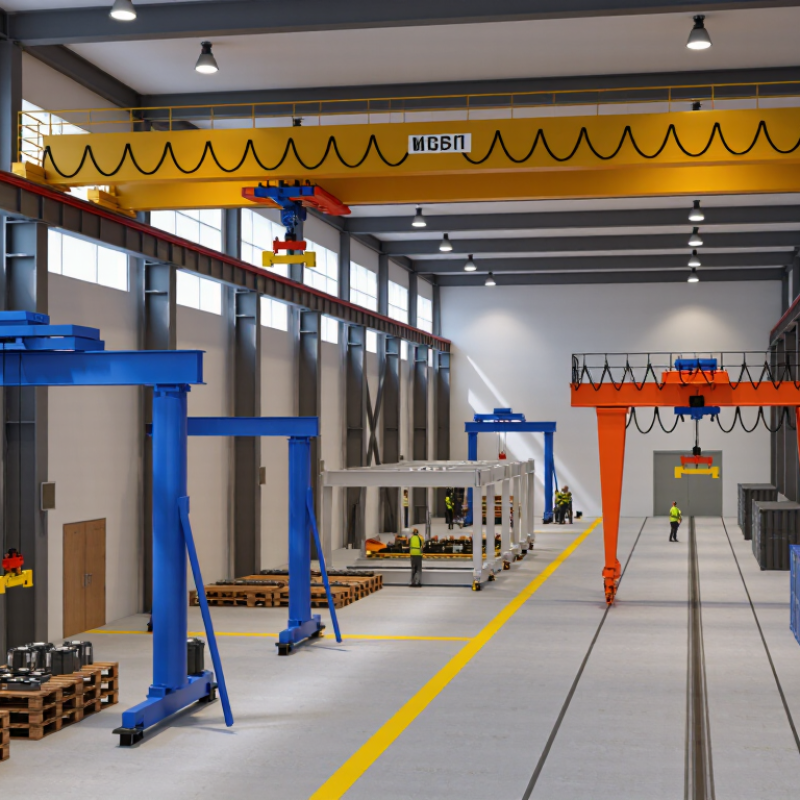
Indoor crane choice depends on load size, travel distance, headroom, and how often lifts occur. An overhead bridge crane suits repeated movement across a broad work area. It travels along elevated runway beams, keeping floor space clear. However, the building must support the runway and lifting loads. Check roof clearance, columns, and existing services before planning installation.

A gantry crane can work where overhead support is unavailable. Its legs stand on the floor, so confirm that the wheels and load will not exceed floor limits. A jib crane serves a smaller zone, such as one machine or loading bench. It is compact, but its reach is limited. Workstation cranes offer lighter, more controlled handling near assembly tasks. The best fit is not always the largest crane; an oversized system may restrict movement or add needless cost.

Tips: Measure the lowest obstruction, not just ceiling height. Record the heaviest load, lift frequency, and path. Check doorways and turning space. Ask a qualified engineer to review building capacity and installation needs. Leave room for maintenance access. A small measurement gets missed sometimes—recheck it before ordering.

Assess Building Space, Floor Capacity, and Installation Limits

An indoor crane must fit the building as it exists, not as a drawing suggests. Measure the narrowest doorway, lowest beam, and overhead obstructions along the full lifting route. Record hook height with the load attached; a crane that clears an empty hook may still leave too little room for a pallet or machine. Measure twice.

Floor capacity deserves equal attention. The crane’s total weight is only part of the load: wheel reactions, outrigger forces, and the lifted load can concentrate pressure in small areas. Check slab drawings where available, then have a qualified structural professional assess uncertain or older floors. Cracks and patched sections are clues, not proof of failure. Still, guessing from appearance is risky.

Installation limits can rule out a seemingly suitable crane. Consider delivery access, available headroom, runway support points, power supply, and space for assembly tools. A gantry may avoid building-mounted supports, but its legs can obstruct aisles or interfere with doors. An overhead unit may preserve floor space, yet demand verified structural connections. Walk the route with measurements and a simple layout before choosing. Real buildings often hold surprises, and an early estimate may need revision.

Check Safety Features, Controls, and 2026 Compliance Needs

For indoor use, match the crane to the building’s clear height, aisle width, floor capacity, and heaviest planned load. Measure around lights, ducts, sprinklers, and doorways; a few centimeters can change the installation. Small details matter. Look for clearly marked load limits, overload protection, upper travel limits, and an accessible emergency stop. In shared work areas, audible warnings and travel-limiting or anti-collision features may reduce risk. They do not replace safe procedures.

Choose controls that suit the operator’s view and working position. A pendant or radio control should have legible labels, responsive buttons, and a reliable stop function. Test controls during commissioning, not just on paper. For 2026 readiness, confirm which current standards and inspection rules apply in your location and to your crane type. Keep inspection reports, maintenance records, capacity documents, and operator training records together. Recheck them after a layout change or repair. An older crane may still work well, but assuming it meets today’s needs without reviewing its condition is an easy mistake. Have a qualified person assess the installation and document any required corrections.

How to Choose a Crane for Inside Use in 2026? — Check Safety Features, Controls, and 2026 Compliance Needs

For U.S. workplaces, OSHA’s overhead and gantry crane rule (29 CFR 1910.179) specifies frequent inspections at intervals from daily to monthly, and periodic inspections at intervals from 1 to 12 months. The chart shows the approximate upper end of each range: 30 days and 365 days. Actual schedules depend on service and equipment condition. When choosing an indoor crane, also verify rated capacity, headroom, travel path, suitable controls, and safety features such as limit devices and emergency stops. Check applicable 2026 requirements for your jurisdiction and crane type.

Select the Crane Capacity, Configuration, and Maintenance Plan

How to Choose a Crane for Inside Use in 2026?
Select the Crane Capacity, Configuration, and Maintenance Plan

Choose capacity from the heaviest realistic lift, not the average one. Include the hook block, below-the-hook device, and any load attachments in your calculation. Then check span, lift height, runway space, and building headroom against a measured floor plan. A bridge crane may suit broad coverage; a jib or gantry may work better for a defined station. Tight aisles change the answer.

Do not treat rated capacity as usable capacity for every task. Confirm load position, lift frequency, travel distance, and duty classification with a qualified engineer. The Occupational Safety and Health Administration’s overhead-crane requirements and CMAA guidance can inform equipment selection and inspection planning. Still, a paper specification cannot reveal every awkward corner or future workflow change. Walk the route with operators before finalizing the layout.

Build maintenance into the purchase decision. Schedule inspections around operating intensity and site conditions, and record checks on brakes, hooks, wire rope or chain, controls, and runway connections. The U.S. Bureau of Labor Statistics reported 5,283 fatal work injuries across U.S. workplaces in 2023; this figure is not crane-specific, but it underscores why inspection records and safe operating procedures matter. A missed check is easy to explain away. That is precisely the habit to challenge.

How to Choose a Crane for Inside Use in 2026? - Select the Crane Capacity, Configuration, and Maintenance Plan

Use this comparison as an initial planning guide. Capacity ranges are typical examples, not design limits; available capacities depend on the equipment, building, duty, and supplier. Have a qualified crane professional verify the final design and installation.

Indoor Crane Selection Comparison
Crane Configuration Typical Capacity Range Best Suited For Space and Building Considerations Selection Checks Routine Maintenance Focus
Top-running bridge crane About 1–20 metric tonnes for many common installations; larger systems are available. Frequent lifting over a broad rectangular work area, such as production bays and maintenance shops. Runs on runway rails supported by building columns or a separately engineered runway structure. Check runway alignment, building clearances, and available hook height. Confirm maximum lifted load, span, lift height, travel coverage, operating frequency, and building or runway capacity. Inspect hoist, wire rope or chain, brakes, wheels, rails, end stops, electrical equipment, and limit devices at intervals set by the manufacturer and applicable rules.
Under-running bridge crane Often selected for lighter-duty loads, commonly up to around 10 metric tonnes, depending on system design. Facilities where a suspended runway can provide useful coverage or where a top-running system is not practical. Bridge travels beneath runway beams, which must be supported by a structure designed for the resulting loads. Check available headroom and obstructions. Verify support-structure capacity, runway configuration, clearances, load distribution, and whether the required coverage can be achieved. Pay close attention to suspension connections, runway beams, track alignment, trolley wheels, hoist components, and travel controls.
Monorail hoist system Commonly about 0.125–10 metric tonnes, depending on the hoist and track system. Repetitive lifting along a fixed route, such as moving components between defined workstations. Requires a suitable overhead support and a track layout that follows the required path. Curves and switches can affect trolley movement and capacity. Map the full load path, including transfer points, curves, stops, hook approach, and any need for powered travel. Inspect track supports and joints, trolley wheels, hoist, stops, switches, and powered travel equipment where fitted.
Wall-mounted or floor-mounted jib crane Often about 0.125–5 metric tonnes; capacity and reach vary by model and mounting design. Local lifting at a workstation, machine, or loading point without covering the entire building bay. Wall-mounted units need a suitable supporting structure. Floor-mounted units need an engineered foundation and adequate clearance for the boom and load. Check rated load at the working radius, boom rotation, reach, mounting or foundation design, and interference with nearby equipment. Inspect pivot bearings, boom, tie rods where fitted, mounting bolts, foundation, hoist, trolley, and rotation stops.
Portable gantry crane Commonly about 0.5–10 metric tonnes, subject to the specific frame, span, and operating conditions. Occasional lifting in multiple locations where a permanent runway is not required. Needs a firm, level floor and sufficient clearance for the frame and load. Some designs are adjustable or mobile; movement while loaded is allowed only when specifically designed for it. Check floor capacity, wheel and brake design, frame stability, span, height adjustment, and the manufacturer's rules for movement under load. Inspect frame members, fasteners, wheels, brakes, adjustment pins, hoist, and signs of impact, wear, or deformation.
Capacity, Configuration, and Maintenance Planning Checks
Planning Dimension What to Determine Practical Guidance Example Record for the Purchase Specification
Required capacity The heaviest load to be lifted, including below-the-hook lifting devices when applicable. Select a rated capacity that covers the actual lifted load and verify the complete lifting arrangement. Do not exceed the rated capacity of any component. Maximum lifted load: 3.2 tonnes; lifting attachment: 0.3 tonnes; specify a system rated for the resulting total and verify all components.
Span and coverage Distance between runway rails, required hook travel, and areas where loads must be picked up or placed. Use a floor plan to identify coverage gaps, obstructions, end approaches, and travel limits before selecting a configuration. Runway span: 12 m; required hook coverage: marked workstation and service areas.
Lift height and headroom Required hook elevation, tallest load, and available clearance below the roof, lights, ducts, and other equipment. Compare the hoist's headroom requirement with measured building clearances; nominal building height alone is not sufficient. Required hook lift: 5 m; verify hook height with the actual hoist and bridge arrangement.
Duty and operating frequency Loads per hour, operating hours, load spectrum, travel frequency, and expected service life. Give the supplier realistic operating data so the hoist, motors, brakes, and crane duty classification can be selected appropriately. Two shifts per day; approximately 20 lifts per hour; typical load and maximum load documented separately.
Controls and safety features Required operator position, visibility, travel control, and site-specific risk controls. Evaluate pendant or radio control, emergency stopping, travel limits, warning devices, and any required overload or collision-prevention features. Radio control with emergency stop; end-travel limits; features confirmed against the risk assessment.
Pre-use checks Checks needed before operation and the method for reporting defects. Train operators to follow the manufacturer's instructions and site procedures. Remove defective equipment from service when required. Check controls, hooks and latches, visible rope or chain condition, brakes, and abnormal sounds before use.
Periodic inspection and servicing Inspection frequency, maintenance tasks, competent personnel, and records required by the equipment instructions and local regulations. Set intervals according to use, duty, environment, manufacturer recommendations, and applicable rules. There is no single interval suitable for every crane. Documented inspection schedule, findings, repairs, component replacements, and next due date.
Building and installation verification Runway, support steel, foundations, floor, electrical supply, and installation conditions. Obtain engineering review of supporting structures and installation loads before purchase or installation. Confirm commissioning and required examinations before service. Approved support design; installation and commissioning records retained with the crane file.

Important: Capacity ranges and examples are for preliminary comparison only. Final selection, structural design, inspection, and maintenance must follow the crane manufacturer's instructions and the regulations applicable at the installation site.