How to Choose the Best Tower Cranes for Your Construction Projects?
Choosing the right tower cranes for construction projects is a vital task. These machines play a crucial role in lifting heavy materials efficiently. Selecting the best tower cranes can enhance productivity and safety on site. However, making this decision requires careful consideration and expertise.
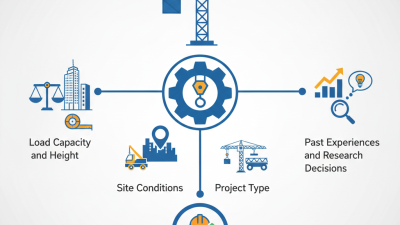
Different projects may require different kinds of tower cranes. Factors like site conditions, load requirements, and height limitations come into play. A larger crane may not always be the best choice. In some cases, a smaller, more agile crane might be more efficient. It is essential to evaluate the unique needs of each project carefully.
Experience in the industry can greatly assist in making the right selection. Consulting with professionals helps in understanding the capabilities of various models. Reliability and safety ratings are also critical. Ultimately, informed choices in choosing tower cranes lead to more successful construction outcomes. Reflecting on past projects can provide insights for future decisions.

Understanding the Different Types of Tower Cranes Available
When selecting a tower crane, understanding the various types is essential. Each type serves unique functions on construction sites. The most common types include luffing jib, hammerhead, and flat-top cranes. Luffing jib cranes are ideal for restricted spaces as their jibs can be raised and lowered. This feature allows for better maneuverability, especially in urban areas where buildings are close together. According to a recent industry report, nearly 40% of construction projects in congested environments prefer luffing jib cranes due to their compact design.
Hammerhead cranes, on the other hand, are known for their heavy lifting capabilities. They are suitable for large projects where lifting capacity is crucial. These cranes often have a fixed jib that can rotate, providing extensive reach. A study indicates that projects requiring heavy lifting saw a 25% increase in efficiency using hammerhead cranes. However, they require more space and can be cumbersome in smaller sites.
Flat-top cranes are gaining popularity for their versatility. They can be quickly assembled and disassembled, saving time on projects. Their design allows for easier operation and maintenance compared to other crane types. Nevertheless, the stability of a flat-top crane can sometimes be a concern in windy conditions. Evaluating the operating environment is critical for maximizing their benefits. Understanding the various types helps in selecting a crane that aligns with specific project needs.
Assessing the Load Capacity Requirements for Your Project
When selecting a tower crane, evaluating the load capacity is crucial. The load capacity directly impacts construction efficiency. Start by determining the maximum load your project will require. This includes the weight of all materials, tools, and any lifting equipment. Be precise in these calculations. An underestimation can lead to serious safety risks.
Next, consider the working radius and height of the crane. Different projects have varying spatial constraints. If the crane cannot reach the necessary areas, it can create delays and extra costs. Document the layout of your construction site. This information is vital in making informed decisions about the crane’s specifications.
Some projects might require cranes with adjustable load capacities. This flexibility can be useful as project demands evolve. Reflect on the potential challenges of load shifts during operation. Engineers often encounter unexpected changes. Having a crane that adapts to these changes is a not-so-common asset. By focusing on these aspects, you can enhance project safety and operational success.
Load Capacity Requirements for Different Crane Types
Evaluating Crane Height and Reach Based on Site Conditions
Selecting the right tower crane for your construction site can be daunting. One crucial factor is evaluating crane height and reach, which must align with your site's conditions. The height of a tower crane directly influences its load capacity. Higher cranes can lift heavier loads from greater distances.
Consider the surrounding environment. Are there nearby buildings or structures? This can restrict the crane's reach and make certain lifts impossible. Inspect your site's layout and take note of overhead obstacles. They will severely limit how effectively you can use the crane.
Tips: Always measure the exact height required for your project. Ensure the crane can safely manage that drop. Think about the vertical and horizontal distances you will work across. Conduct a thorough site assessment to avoid costly delays and safety issues. It's essential to revisit your equipment choices as site conditions evolve. Adapting your crane setup can lead to improved efficiency and safety throughout your project. Making thoughtful decisions now can prevent problems later.
Comparing Cost vs. Performance for Optimal Crane Selection
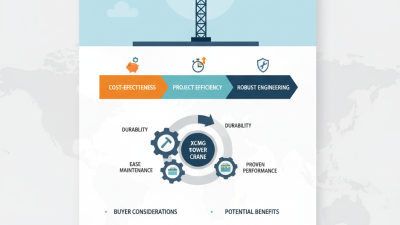
When selecting a tower crane for your construction projects, it’s essential to weigh cost against performance. High-performing cranes can boost productivity and safety. However, they often come with a hefty price tag. Keeping budget constraints in mind is crucial. A cheaper option might lead to increased maintenance costs down the line.
Performance is not just about lifting capability. It includes ease of operation and reliability. A crane that frequently breaks down can halt projects and escalate costs. Look for models that have a reputation for durability and efficiency. It's worth considering the long-term implications of your choice. A well-performing crane may have higher upfront costs but can save money over time.
Choosing the right tower crane blends art and science. Contractors often face trade-offs, grappling with performance versus initial expenditure. For some, a bit of research can feel overwhelming. Assessing your project's specific requirements is critical. Engage with seasoned professionals for advice and insights. Embrace the learning process to enhance your decision-making skills.
Identifying Safety Features and Compliance Standards in Tower Cranes
When selecting tower cranes for construction, safety features and compliance standards are crucial. A reliable crane must adhere to local and international safety regulations. These regulations ensure that the crane can operate safely in various environments. For instance, look for cranes with overload protection. This feature prevents lifting loads beyond capacity, reducing accidents.
Moreover, examine the crane's structural integrity. Regular inspections and maintenance records are essential. Check for compliance with standards such as ISO or OSHA. These standards offer guidelines on safe operation and materials used. Cranes that meet these requirements provide assurance of their reliability.
Inexperienced operators might overlook these details, leading to serious consequences. Always prioritize cranes with clear safety indicators. Visual cues, such as warning signs, should be easily visible. Detailed operation manuals are also important. They guide operators on safe practices and emergency protocols. Balancing features with compliance can be challenging but is vital for safety.
How to Choose the Best Tower Cranes for Your Construction Projects?
| Feature |
Description |
Compliance Standards |
| Load Capacity |
Maximum weight the crane can lift. |
EN 14439, AS 1418.6 |
| Height of Lift |
Maximum height the crane can reach. |
ISO 4301-1 |
| Safety Features |
Includes emergency stop, overload protection, and anti-collision systems. |
EN 620, ANSI/ASME B30.3 |
| Mobility |
Ease of transportation and repositioning on site. |
ISO 4301-3 |
| Control System |
User interface for operation; may include remote control options. |
IEC 60204-32 |
| Maintenance Requirements |
Frequency and type of maintenance needed for safe operation. |
EN 13155 |