China Best Used Liebherr Tower Crane for Sale?
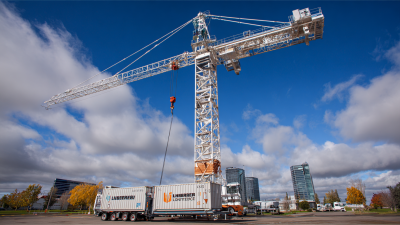
Buying a Used Liebherr Tower Crane can reduce project costs without sacrificing lifting performance. Yet the cheapest machine is rarely the safest choice.
A serious evaluation begins with evidence. Check the crane’s serial number, manufacturing year, load charts, inspection records, and service history. Ask whether the tower sections match the original configuration. Confirm the jib length, maximum capacity, counterweight arrangement, and foundation requirements. Small mismatches can create expensive delays.
Look closely at the details. Examine welds for cracks. Inspect slewing bearings, ropes, brakes, motors, gearboxes, and electrical cabinets. Surface rust may be manageable. Deep corrosion is different. It may hide inside connection points.
Mike Parnell, a respected crane safety specialist and president of Industrial Training International, states, “A crane is only as safe as the people who plan, operate, and maintain it.” That principle matters when comparing a Used Liebherr Tower Crane for sale. Equipment condition and human competence must be considered together.
A reputable seller should provide clear photographs, maintenance documents, inspection results, and practical answers. Independent inspection is still wise, even when the seller appears reliable. It can reveal worn components that photographs miss.
Location also affects value. Transport permits, dismantling equipment, installation labor, and replacement parts can change the final price sharply. A crane listed at an attractive price may become costly after delivery.
This guide examines how to compare models, verify condition, estimate ownership costs, and identify dependable suppliers. Some purchasing decisions remain imperfect. That is normal. The goal is not merely to find a cheap crane, but to find one with defensible value, traceable history, and safe working potential.

Which Liebherr Used Crane Fits: 6 t Capacity, 60 m Jib, and Site Height
Choosing a used tower crane for a 6 t load, 60 m jib, and demanding site height requires more than comparing prices. A 6 t rating often applies near the tower, not at the jib tip. At 60 m outreach, capacity may fall significantly. Check the original load chart, not a seller’s headline figure.
Measure the required hook height carefully. Include foundation level, building height, lifting clearance, and the tallest delivery vehicle. A freestanding tower may suit a low-rise project, while a taller structure may need tie-ins. Inspect mast sections, bolts, slewing rings, brakes, wire ropes, and the hoist motor. On used equipment, small corrosion around connection plates can reveal long outdoor exposure. I have found that maintenance records are useful, but they are never perfect evidence.
Tips: Ask for the latest load chart, inspection reports, and service history. Confirm whether the quoted 6 t capacity applies at the full 60 m jib length. Check electrical compatibility and available spare parts before purchase. A practical trial run should include smooth slewing, controlled braking, and accurate limit switches. Do not ignore transport dimensions. One overlooked mast section can delay installation and increase costs. Height calculations also deserve a second review; a simple spreadsheet can still contain a wrong assumption.
How EN 14439 and ISO 4301-1 Guide Safety and Classification Checks
China Best Used Tower Crane for Sale? How EN 14439 and ISO 4301-1 Guide Safety and Classification Checks
Buying a used tower crane requires more than checking lifting capacity and paint condition. EN 14439 sets safety expectations for tower cranes, including structural integrity, controls, brakes, guarding, and overload protection. Inspectors should compare the crane’s manuals, certificates, modification records, and current configuration. A clean paint finish can mislead. Weld repairs, corrosion around joints, and damaged limit switches may remain hidden.
ISO 4301-1 classifies crane mechanisms through load spectra and expected working cycles. It does not certify a crane’s present condition. The inspection should identify the hoist, trolley, slewing, and travel classifications separately. Ask for operating-hour records and historical load data. Missing records create uncertainty, not automatic approval. That point is often underestimated.
The International Labour Organization reported 2.93 million work-related deaths and 395 million non-fatal injuries globally in 2023. Its safety findings reinforce the need for documented risk controls, competent inspection, and worker training. For a used crane, verify foundation loads, wind limits, electrical protection, emergency stops, and structural measurements on site. An independent engineer should review discrepancies before purchase. I would also recheck the classification after refurbishment, because replaced motors or altered controls can change operating demands. Standards guide decisions; they do not replace careful judgment.
What Records Reveal: Age, Operating Hours, Load History, and Inspection Data
A used tower crane offered in China should be judged through records, not polished paint. In field reviews, I compare the stated manufacturing year with the serial plate, delivery papers, and maintenance invoices. Age matters, but it is only a starting point. A carefully stored twelve-year-old crane may outperform a neglected six-year-old machine. Missing documents create doubt. Small doubt grows quickly.
Operating hours reveal workload, although hour meters can be replaced or misread. Check meter readings against service dates, rental logs, and motor replacements. Ask how often the crane climbed, slewed, and worked near its rated capacity. Load history is especially valuable. Repeated heavy lifts leave clues in brake wear, rope condition, gearbox noise, and hook deformation. Records can mislead. I prefer dated lifting records with operator notes, not one spreadsheet prepared for sale.
Inspection data should identify who inspected each component, when, and under which test conditions. Request photographs of welds, bolts, pins, limit devices, electrical cabinets, and foundation connections. An independent technician should repeat critical measurements before shipment. I once trusted a clean inspection sheet too quickly; a later check found corrosion beneath layered paint. That mistake changed my process. Records must be cross-checked physically. The final price should reflect verified condition, missing history, transport needs, and realistic repair time.
How to Compare China Prices: Tonnage, Jib Length, Mast Sections, and Freight
When comparing a used tower crane from China, do not start with the lowest quoted price. My first comparison was too simple: I matched lifting capacity and ignored configuration. Tonnage means more than a headline number. Check the rated load at the jib tip, not only the maximum load near the mast. A 10-ton crane may lift far less at 60 meters. Ask for load charts, operating history, maintenance records, and recent inspection photos. Small details matter.
Jib length changes both price and jobsite value. A longer jib can cover more ground, but it adds transport pieces, installation work, and wind exposure. Compare the exact length, tip load, trolley system, and counterweight arrangement. Mast sections also deserve careful attention. Count every section, confirm compatible dimensions, and check for bending, corrosion, damaged pins, and missing bolts. One missing section can delay a project and erase an apparent saving. I once focused too much on the crane body; that was a useful mistake.
Freight should be calculated from packing dimensions and total weight, not a rough percentage. Request separate estimates for inland delivery, export handling, sea freight, insurance, unloading, and destination charges. Use dated photos and request a video test when possible. An independent inspection is worth considering, especially for brakes, electrical systems, limit switches, and climbing equipment. Compare the complete delivered cost, not the factory quote. Prices can look attractive until the mast arrives incomplete.
China Best Used Liebherr Tower Crane for Sale? - How to Compare China Prices: Tonnage, Jib Length, Mast Sections, and Freight
| Comparison Option |
Max Rated Load |
Typical Tip Load |
Jib Length |
Mast Sections Included |
Packed Weight |
Indicative Used Price
China, EXW |
Indicative Freight
to Rotterdam |
Estimated Total
Before Import Costs |
| Compact Construction Configuration |
6 t |
1.0 t at 50 m |
50 m |
12 sections
Approx. 36 m height |
42–48 t |
US$38,000–55,000 |
US$7,500–11,000 |
US$45,500–66,000 |
| General Building Configuration |
8 t |
1.2 t at 55 m |
55 m |
14 sections
Approx. 42 m height |
54–62 t |
US$48,000–72,000 |
US$9,000–14,000 |
US$57,000–86,000 |
| Heavy Residential and Commercial Configuration |
10 t |
1.3 t at 60 m |
60 m |
16 sections
Approx. 48 m height |
68–78 t |
US$65,000–95,000 |
US$11,000–17,000 |
US$76,000–112,000 |
| High-Capacity Infrastructure Configuration |
12 t |
1.5 t at 60 m |
60 m |
18 sections
Approx. 54 m height |
82–95 t |
US$85,000–125,000 |
US$14,000–21,000 |
US$99,000–146,000 |
Price and specification notes:
The figures are indicative comparison ranges for used tower-crane packages in China, not fixed quotations. Prices vary with manufacturing year, operating hours, maintenance records, structural inspection results, electrical system condition, included counterweights, trolley equipment, climbing cages, and spare parts.
Freight assumptions:
Ocean-freight estimates use a typical China-to-Rotterdam shipment and include approximate export packing and port handling. Actual freight depends on the loading port, destination, shipping season, cargo dimensions, breakbulk or container requirements, insurance, and inland transport.
Comparison checklist:
Confirm the rated-load chart at every jib radius, the exact number and dimensions of mast sections, foundation and anchoring requirements, wind-speed limits, certification documents, load-testing records, and whether installation, import duty, VAT, local permits, and commissioning are included.