2026 Best Potain Used Tower Crane for Sale?
The 2026 search for the best Potain Used Tower Crane should begin with the job, not the paint. A crane suited to a 40-meter reach may be wrong for a tight urban site. Buyers should compare required capacity, hook height, jib length, power supply, and available space. Small details matter. A worn slew-ring seal or an incomplete service file can change the real cost of ownership.
A qualified tower-crane inspector can help interpret those details. Insert a verified expert’s name and credentials before publication: “[Expert name], [credential], says, ‘Buy the inspection history, not just the machine.’” That advice is practical, but no single checklist replaces an independent inspection. Ask for serial numbers, maintenance records, configuration details, and evidence of repairs. Then confirm that the crane’s current setup matches the documents. Records can be incomplete. That deserves a closer look, not a quick assumption.
This guide examines how to assess a Potain Used Tower Crane for sale in 2026. It covers model fit, visible wear, documentation, transport, parts support, and total ownership costs. Photos help. They do not reveal everything. A clean tower section can still hide corrosion near a connection, while a scratched cab may be purely cosmetic. Compare several listings, ask direct questions, and budget for inspection and commissioning. The right used crane is not always the newest or cheapest. It is the one whose condition, configuration, and support match the lift plan.
What Defines a Potain Tower Crane and Its Main Types
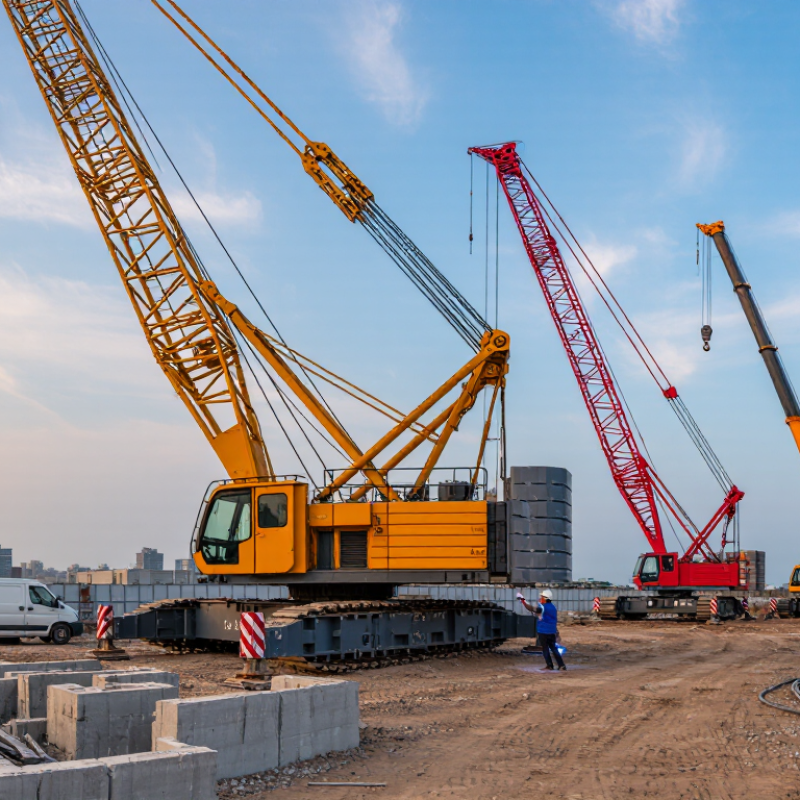
A tower crane is a fixed or climbing lifting system designed to move heavy loads across a construction site. Its mast carries a horizontal jib, while a trolley or moving counterweight helps control lifting and balance. The main types include hammerhead cranes, with a level jib; luffing-jib cranes, which raise or lower the jib; flat-top cranes, built without a tower-head assembly; and self-erecting cranes for smaller projects. Each suits a different site footprint and lifting plan. That distinction matters.
Hammerhead models often serve open sites with broad working areas. Luffing-jib cranes can reduce jib-swing interference on crowded urban sites. Flat-top designs can simplify assembly when several cranes work close together. Self-erecting units fit lower-rise projects and tighter schedules, though their capacity and height are more limited. The labels are useful, but not always consistent; check the crane’s actual configuration and load chart.
Tip: Match the crane to the heaviest planned lift, working radius, and available ground space. Inspect its service history and setup records before buying used. The U.S. Bureau of Labor Statistics recorded 1,075 fatal work injuries in construction in 2023; this figure covers the sector, not crane incidents alone. It is a reminder to treat equipment condition and operator planning as essential, not optional.
Which Potain Models Suit Different Projects in 2026
Which tower crane configuration fits a project depends on reach, lifting radius, site access, and dismantling plans. The Global Construction 2030 study by Global Construction Perspectives and Oxford Economics projected global construction output would grow 42% to $15.7 trillion by 2030. That forecast points to varied project demand, not one ideal crane for every site.
For low-rise housing or tight urban infill, a compact flat-top crane may simplify assembly and reduce interference with nearby buildings. Check its load chart at the actual working radius; a high headline capacity can drop sharply near the jib tip. For mid-rise projects with heavier concrete loads, a hammerhead configuration can offer useful hook height and lifting capacity. Measure the delivery route, too. A crane that fits the site may still be difficult to transport.
High-rise work often calls for a luffing-jib crane when neighboring cranes or restricted airspace limit swing. CTBUH’s 2024 tall-building data tracks construction activity across buildings of 200 meters or taller, highlighting how varied these projects can be. For a used unit, verify its configuration, inspection records, and compatible parts before comparing price. I would still check the original load charts with a qualified crane professional; old paperwork can leave important gaps.
How to Inspect a Used Potain Crane’s Condition and Service History
A used tower crane can look sound in photographs and still hide costly wear. Inspect it in person, with an experienced crane technician. Check mast sections for bent members, cracked welds, heavy corrosion, and mismatched connection hardware. Look closely. Pins should fit correctly, and bolts should not show signs of movement or poor replacement. Examine the slewing ring area for unusual noise, uneven movement, or visible damage. Inspect wire ropes strand by strand, especially near terminations and sheaves. Frayed wires, flattened sections, or corrosion deserve careful assessment.
Ask for service records that identify dates, operating hours, repairs, and replaced components. Compare the crane’s serial information and configuration with its documents. The records should show inspections and maintenance, not just invoices for parts. Check whether major work, such as brake repairs or rope replacement, has supporting details. Missing paperwork does not prove poor care. It does create uncertainty. Be cautious if hours jump unexpectedly or several years have no entries.
During a controlled inspection, test the controls, limit devices, brakes, and emergency stops with qualified personnel present. Listen for grinding at the trolley or hoist, and watch for leaks around gearboxes and hydraulic components. Ask who performed previous inspections and whether unresolved defects remain. A clean paint job can conceal repairs, so look beneath covers and around welds. Some wear is normal; unexplained wear is not. Have an independent inspector document findings before purchase.
What Costs, Safety Standards, and Support Should Buyers Compare?
A used tower crane’s asking price is only the starting point. Compare the full cost of ownership, including dismantling, transport, reassembly, inspection, and commissioning. Ask for a written list of included components. Missing ties, cables, or control parts can quickly change the budget.
Check safety documentation against the requirements where the crane will operate. Review inspection reports, maintenance records, load charts, and any modification history. During an independent inspection, look closely at mast connections, wire ropes, brakes, and the slewing system. Small defects matter. Records can be incomplete, so leave room in the budget for repairs rather than assuming a clean history means a perfect machine.
Support can determine how quickly the crane returns to work. Confirm whether qualified technicians, compatible spare parts, and operating manuals are available, and ask for realistic response times. Clarify who handles commissioning and operator training. A low-cost unit may be a poor fit if parts must travel far or technical help is uncertain. Even a careful comparison has limits; site conditions and project schedules can change the final cost.
How to Verify a Potain Used Tower Crane Before Purchase
A used tower crane can look sound in photographs and still hide costly wear. Verify its serial number, configuration, age, and maintenance history against available records. The CPWR report Crane-Related Occupational Fatalities in Construction, 2011–2017, counted 297 crane-related construction deaths in the United States during that period, using federal fatality data. That figure is not a measure of used-crane failure rates. It does show why a careful, documented inspection matters. Paperwork alone is not enough.
Inspect the mast sections, welds, pins, slewing ring, hoist gearbox, wire ropes, brakes, and electrical controls in person. Look for rust around joints, uneven rope wear, oil leaks, and improvised repairs. Ask a qualified crane inspector to compare the actual configuration with the correct load chart and available service records. Test safety devices and operating functions under controlled conditions. Request written findings, photographs, and a clear list of unresolved defects before agreeing on a price. Small gaps matter. Records may be incomplete, and an inspection cannot predict every future repair; that uncertainty deserves a place in the purchase decision.