Leave Your Message
Choosing a Potain Used Tower Crane in China requires more than comparing purchase prices. Buyers must examine age, lifting records, maintenance history, parts availability, and previous working conditions. A crane standing beside a busy construction yard may look ready, yet hidden wear can exist inside the slewing ring, wire ropes, brakes, and electrical cabinets.
Market reports from Mordor Intelligence and Research and Markets indicate continued global tower crane growth, driven by urban construction and infrastructure investment. However, these reports rarely separate new equipment from used machines. That gap matters. It makes local inspection and document verification essential, especially in China’s active resale market.
Murray Pollok, editor of International Cranes and Specialized Transport, has often stressed a practical principle: “A crane’s real value depends on its condition, history, and support.” This view should guide every Potain Used Tower Crane evaluation. Manitowoc’s annual reports also emphasize product support, safety, and lifecycle value across the Potain brand.
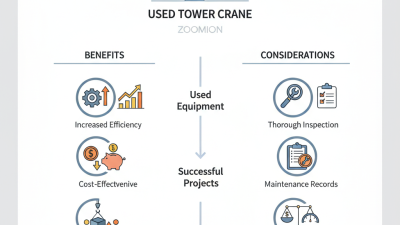
A strong choice is not always the newest crane. Sometimes, a carefully maintained MC, MCT, or MD model offers better value, faster delivery, and familiar operation. But assumptions can be expensive. Buyers should compare rated capacity charts, inspection reports, serial-number records, and replacement-part lead times. They should also confirm assembly quality and operator training.
This article examines China’s most practical options. It considers price, reliability, transport, refurbishment, and after-sales support. The final recommendation may not be perfect for every project. That is the point. A suitable crane must match the site, not merely the sales brochure.
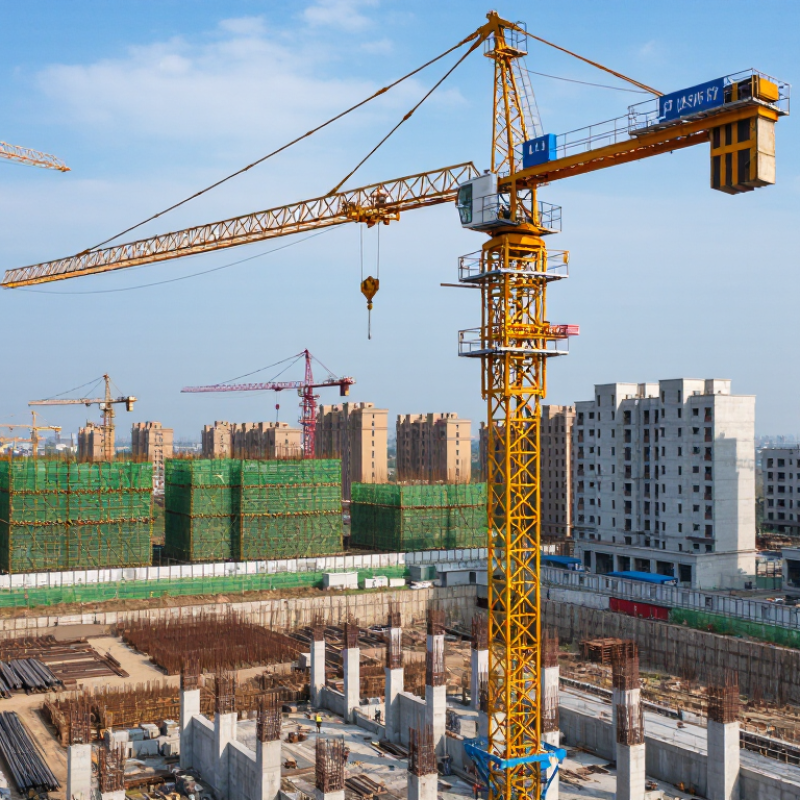
Used tower cranes come in several practical forms, each suited to a different construction environment. Flat-top models work well on residential and commercial sites with multiple cranes. Their simple jib design reduces interference during coordinated lifting. Hammerhead cranes offer strong horizontal coverage for dense building projects. Luffing-jib cranes perform better in narrow urban areas, where the jib must rise sharply. Self-erecting models suit smaller projects and shorter schedules. They are convenient, but their lifting capacity is usually more limited.
Applications range from apartment construction to factories, bridges, warehouses, and infrastructure work. A reliable used crane should match the project’s maximum load, lifting radius, foundation design, and available power supply. Check the load chart carefully. It should remain readable and consistent with the actual configuration. Key features include variable-speed hoisting, accurate slewing control, climbing systems, anti-collision devices, and emergency brakes. Operators also need clear visibility and responsive controls.
Condition matters more than fresh paint. Inspect the tower sections, pins, welds, bolts, wire ropes, electrical cabinets, and gearbox for wear. Review maintenance records and previous assembly reports. Missing documents create uncertainty. In my assessment, a crane can look excellent while hiding fatigue around heavily loaded connections. That risk deserves attention. A third-party inspection, load testing, and a qualified installation team can reveal problems before site operations begin. Price alone is not a dependable measure of value.
| Used Tower Crane Type | Typical Maximum Load | Typical Maximum Jib Length | Typical Free-Standing Height | Common Applications in China | Key Advantages | Important Inspection Points | Best Use Case |
|---|---|---|---|---|---|---|---|
| Top-Slewing Tower Crane | 6–25 tonnes | 40–80 metres | 30–60 metres | High-rise residential buildings, commercial complexes, industrial facilities, and infrastructure projects | Strong lifting capacity, wide working radius, good suitability for long-duration construction | Mast section deformation, slewing ring condition, gearbox noise, structural welds, brakes, and load moment limiter | Large projects requiring high lifting capacity and long reach |
| Hammerhead Tower Crane | 6–20 tonnes | 35–70 metres | 25–55 metres | Apartment blocks, office buildings, prefabricated construction, and general building projects | Simple horizontal jib arrangement, stable operation, and efficient coverage of regular building sites | Jib alignment, trolley ropes, trolley wheels, hoist motor, limit switches, and corrosion on connections | Regular-shaped sites with repetitive lifting operations |
| Flat-Top Tower Crane | 4–16 tonnes | 30–70 metres | 25–50 metres | Urban construction sites, projects with several cranes, and sites requiring reduced top-level interference | Compact top structure, easier transport and assembly, and practical coordination between multiple cranes | Jib connection pins, trolley system, mast plumbness, electrical controls, and overload protection | Multi-crane sites with limited airspace or restricted assembly conditions |
| Luffing-Jib Tower Crane | 6–20 tonnes | 30–60 metres | 30–60 metres | Dense urban areas, narrow sites, high-rise buildings, and projects near airports or existing structures | Small operating radius when the jib is raised, reduced oversailing, and improved suitability for confined sites | Luffing mechanism, hydraulic or rope system, jib angle indicator, pins, brakes, and fatigue cracks | Restricted urban sites where oversailing must be minimized |
| Self-Erecting Tower Crane | 1–8 tonnes | 20–45 metres | 15–35 metres | Low-rise housing, small commercial buildings, agricultural facilities, and short-term projects | Fast setup, relatively low transport requirements, and reduced dependence on a separate erection crane | Hydraulic cylinders, folding joints, outriggers or base, control panel, and transport-related damage | Small or mobile projects requiring rapid deployment |
| Internal-Climbing Tower Crane | 8–20 tonnes | 35–65 metres | Project-dependent; increases inside the structure as construction rises | Very tall buildings, skyscrapers, and projects with limited external foundation space | Efficient height growth, reduced ground footprint, and suitability for very tall structures | Climbing frame, anchoring system, hydraulic equipment, climbing sequence controls, and structural supports | Tall buildings where external crane foundations or tie-ins are restricted |
| Rail-Mounted Tower Crane | 4–12 tonnes | 30–55 metres | 20–45 metres | Long industrial buildings, shipyards, precast yards, and projects with extended linear work zones | Longitudinal movement along prepared rails and efficient coverage of elongated construction areas | Rail gauge, wheel assemblies, travel brakes, rail foundations, end stops, and anchoring arrangements | Sites where lifting demand moves along a fixed linear route |