Top 10 Construction Crane Types You Need to Know?
Construction cranes are vital to the building industry. They enable the lifting and moving of heavy materials safely and efficiently. Understanding various types of construction cranes is essential for project success and safety.
In this guide, we discuss the top ten construction crane types. Each type serves a specific purpose and is suited for different tasks. From tower cranes to mobile cranes, the options are vast. Knowing the strengths and weaknesses of each type is crucial.
Mistakes happen in construction. Choosing the wrong crane can lead to safety hazards and project delays. It's not just about lifting; it's about doing it right. This overview aims to shed light on vital crane types you should know.
Overview of Construction Crane Types
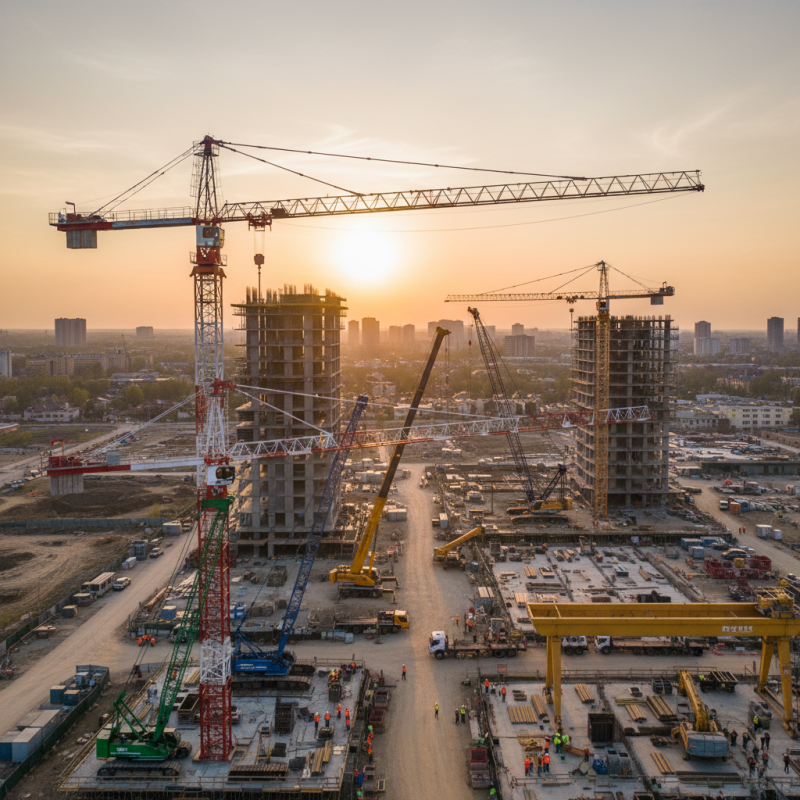
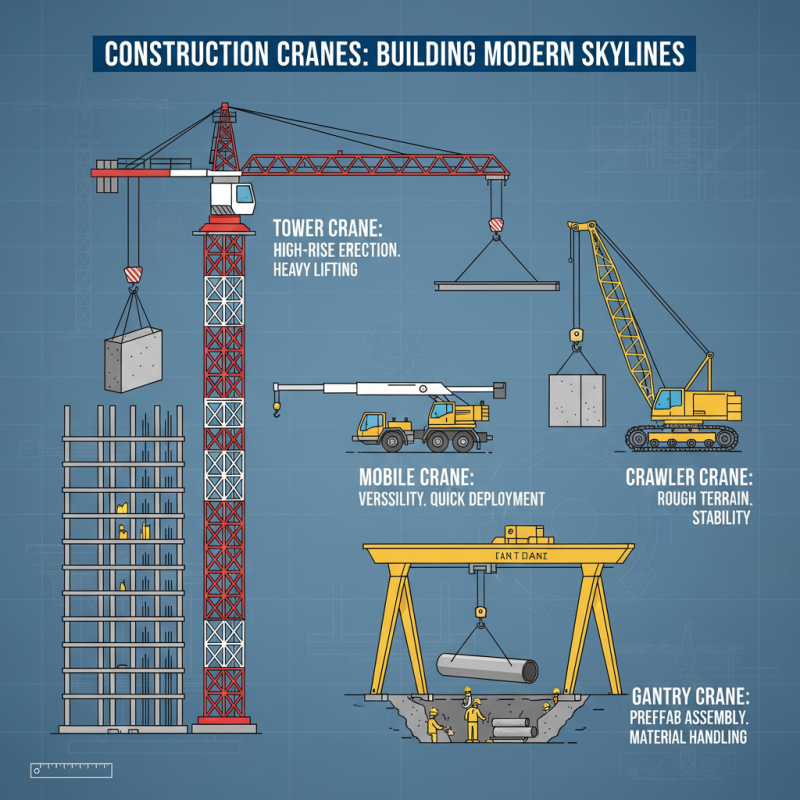
Construction cranes play a pivotal role in modern building projects. There are various types of cranes, each designed for specific tasks. Tower cranes are among the most recognized. They offer high vertical reach and can lift heavy materials. Often seen in city skylines, they are essential for erecting large structures. The installation requires careful planning and precise engineering.
Mobile cranes provide versatility. They can be easily relocated and adapted to different sites. These cranes are equipped with wheels or tracks, allowing for quick setup. However, their lifting capacity is often limited compared to tower cranes. The balance is crucial, especially on uneven ground. Operators must be well-trained to avoid accidents.
On the other hand, boom cranes have a fixed arm and are typically used for tasks like lifting materials onto roofs. They are stable but have a limited range of movement. Each crane type has its own advantages and drawbacks. Understanding these differences can help in selecting the right crane for the job. Savvy project managers often struggle with choosing the best option for specific scenarios. Every choice has implications for safety and efficiency.
Mobile Cranes: Versatility in Construction Projects
Mobile cranes are essential in modern construction. Their versatility allows them to adapt to various projects. Reports show that mobile cranes accounted for about 40% of crane sales in 2022. This showcases their importance across industries.
These cranes can move quickly between job sites. They can lift heavy materials while navigating tight spaces. A typical mobile crane can lift loads from 10 to 150 tons. Yet, operating them requires skilled operators. Improper handling can lead to accidents and project delays. Training and safety protocols are crucial, though often overlooked.
In urban construction, mobile cranes are invaluable. They reduce the need for multiple cranes and minimize site clutter. However, their mobility comes with challenges. Site access and ground stability are still issues. Heavy loads can compromise ground integrity, leading to safety hazards. More focus on site assessments could improve safety and efficiency.
Tower Cranes: Reaching New Heights in Urban Development
Tower cranes play a vital role in shaping urban landscapes. Their towering presence is a common sight on construction sites. These cranes are designed to lift heavy materials high above ground. With their impressive reach, they enable the construction of skyscrapers and large complexes. The sight of a tower crane against the skyline is often mesmerizing.
However, the use of tower cranes is not without challenges. They require careful planning and installation. Poor positioning can lead to unsafe conditions. Crane operators must be highly skilled, as mistakes can have serious consequences. Moreover, the height of these cranes adds complexity, affecting wind resistance and stability. Regular maintenance is crucial to ensure they operate efficiently.
Despite these challenges, tower cranes represent innovation in construction. They push the limits of what can be built. Their design continues to evolve, incorporating new technology for safety and efficiency. Understanding the intricacies of tower cranes is essential for anyone in the construction industry. As cities expand, these cranes will remain indispensable in reaching new heights in urban development.
Crawler Cranes: Stability and Mobility on Various Terrains
Crawler cranes are essential in the construction industry. They combine stability and mobility, making them perfect for various terrains. Their undercarriage consists of tracks, allowing them to navigate rough sites easily. This feature significantly improves their performance in challenging environments. A 2021 industry report indicated that crawler cranes can lift loads up to 3,000 tons, showcasing their robust capabilities.
However, operating crawler cranes requires skilled personnel. Practices vary, and not all operators are equally adept at maximizing the crane's potential. It's vital to invest in training and up-to-date safety protocols. A study found that approximately 40% of construction accidents involve cranes. Proper knowledge can mitigate this risk.
Tip: Always assess the site conditions before deployment. Ensure the terrain is stable enough to support the crane. Additionally, regular maintenance checks are crucial. Many operators overlook this, leading to unexpected malfunctions. Safety should always be a priority.
Overhead Cranes: Efficiency in Manufacturing and Warehousing
Overhead cranes are essential in manufacturing and warehousing. They provide high efficiency in moving heavy loads. According to a study by the Material Handling Industry of America, the adoption of these cranes can increase productivity by up to 30%. This improvement proves essential in modern industries, where efficiency is crucial.
These cranes are versatile. They can lift items that weigh several tons. Typical applications include assembly lines, shipping areas, and storage facilities. However, it’s important to reflect on the potential hazards. Improper use can lead to accidents and financial losses. Training operators is vital. Many industry reports recommend ongoing safety training to mitigate risks.
Various types of overhead cranes exist, each suited for specific tasks. Bridge cranes are popular in many warehouses. They can span large areas and handle hefty loads. However, designing an optimal layout is often overlooked. Companies sometimes place cranes in inefficient positions, hindering workflow. Assessing and adjusting these layouts can lead to improved operations.
Top 10 Construction Crane Types You Need to Know
The following chart displays the efficiency ratings of different types of cranes commonly used in manufacturing and warehousing facilities. The efficiency rating is measured based on load capacity and speed of operation.