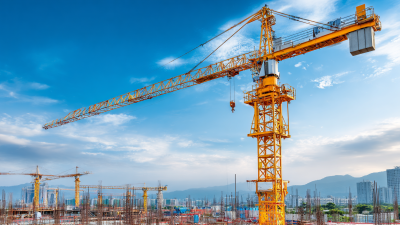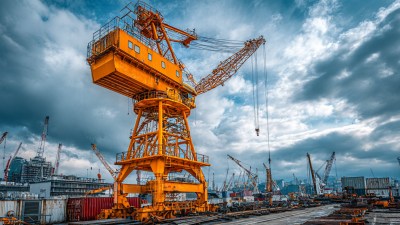
China’s construction boom has created a demanding market for lifting equipment. Construction Crane manufacturers now compete through capacity, reliability, digital monitoring, and after-sales support.
Industry data shows why this market deserves closer attention. Grand View Research estimates that the global crane market will continue expanding through 2030, supported by infrastructure investment, energy projects, and urban redevelopment. Mordor Intelligence also identifies China as a major construction equipment market, although its forecasts vary by product category and reporting method. That difference matters. Market figures are useful, but they should not replace field-level evaluation.
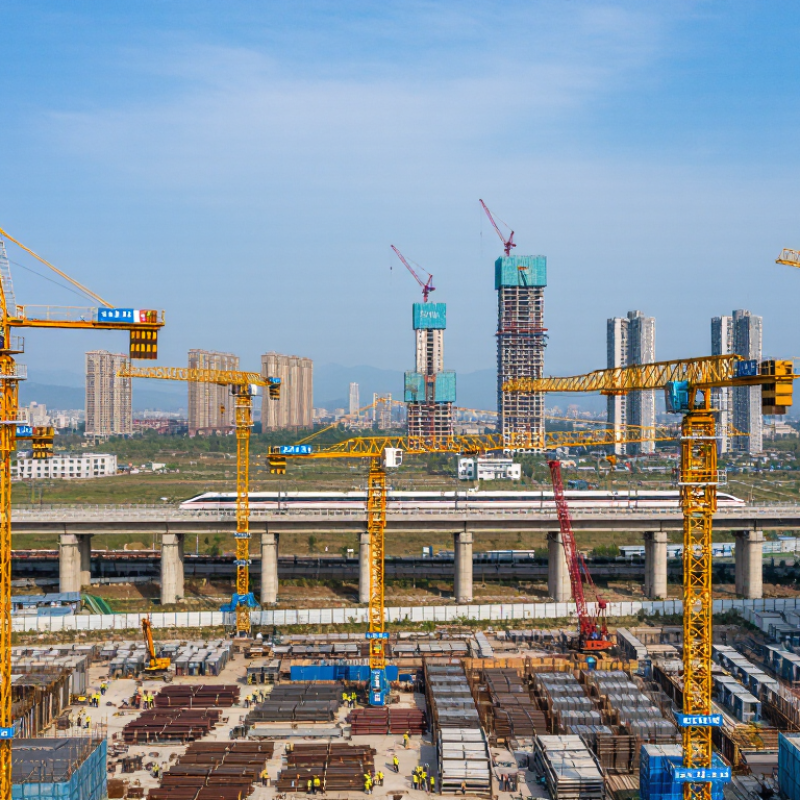
A tower crane rising beside a high-speed railway is more than a striking image. Its load charts, foundation design, operator visibility, wind limits, and maintenance records affect every lift. John Sklar, a crane-safety engineer and educator, expresses the principle clearly: “A crane is only as safe as the people who plan and operate it.”
Safety remains central.
This guide examines China’s top 10 Construction Crane manufacturers through practical criteria. These include product range, lifting capacity, manufacturing experience, certification, technology, service networks, and export performance. Sources include manufacturer disclosures, industry reports, public company information, and construction-equipment research.
Some rankings remain debatable. A large sales volume does not always indicate superior field support. A lower purchase price may create higher lifecycle costs. Buyers should inspect real project references, spare-parts availability, and technician response times before deciding. These details often matter more than polished brochures.
A leading construction crane manufacturer in China is defined by more than production volume or attractive pricing. It should demonstrate practical experience across tower cranes, mobile cranes, and lifting systems used on demanding sites. Engineers must understand load charts, wind conditions, foundation limits, and the daily pressure faced by operators.
Reliable manufacturing begins with traceable steel, controlled welding, and documented inspections. A serious factory checks critical joints, tests braking systems, and verifies overload protection before delivery. Clear manuals matter too. They should explain assembly steps, maintenance intervals, emergency procedures, and safe operating limits without confusing language. Independent testing and recognized certifications can strengthen trust, but paperwork alone proves little.
After-sales support often reveals the real difference. Spare parts should be available, technical staff should respond quickly, and service teams should understand local site conditions. A useful manufacturer also records recurring faults and improves future designs. No factory is perfect. That matters. Honest reporting of a past failure can show stronger professionalism than exaggerated claims. Buyers should inspect production records, visit the facility when possible, and speak with operators who have used similar equipment. A leading manufacturer earns confidence through evidence, steady communication, and performance that remains dependable after the crane leaves the factory.
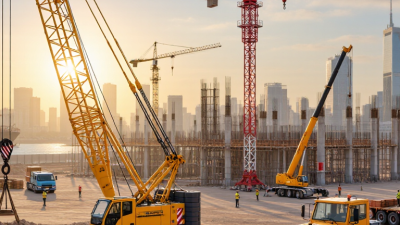
China’s top ten construction crane manufacturers at a glance cover tower, mobile, crawler, and truck-mounted equipment. Their strengths differ across lifting capacity, site mobility, digital controls, and after-sales support. Some focus on compact urban cranes, while others build heavy machines for bridges, ports, and industrial projects. A dependable comparison should examine rated load charts, working radius, wind limits, and transport requirements. These details matter more than impressive brochure photographs.
From practical site observations, manufacturers with clear manuals and responsive service teams often reduce downtime. Check welding quality, hydraulic response, control-panel visibility, and spare-part availability. Ask for tested performance records, operator training, and inspection documentation. A ranking can look precise, but market positions change with technology, delivery speed, and regional support. I would not treat any “top ten” list as permanent. Project conditions can change the preferred choice quickly.
Tips: Compare the crane with your actual lifting plan. Review the heaviest load, maximum height, ground condition, and assembly space. Visit a working site if possible. Listen for unusual hydraulic noise and inspect connection points closely. Confirm independent inspections and local compliance before purchase. Cheap equipment may appear attractive, but weak support can cost more later.
China’s top ten construction-crane manufacturers develop more than lifting frames. Their product ranges commonly include tower cranes, truck cranes, crawler cranes, rough-terrain cranes, and compact hoists. Each type serves different site conditions. Tower cranes reach across dense urban projects, while crawler cranes distribute heavy loads on prepared ground. Truck cranes favor mobility between sites. Rated capacity alone is not enough. Wind limits, foundation design, transport width, and duty cycles matter too. Reliable suppliers provide load charts, inspection records, and installation guidance.
Modern models increasingly use electro-hydraulic controls, variable-frequency drives, and intelligent load monitoring. These systems can smooth starts and reduce unnecessary energy use. Anti-collision functions help coordinate multiple tower cranes. Cameras and remote diagnostics improve visibility during blind lifts. Yet automation is not magic. Sensors need calibration, and operators still need practical judgment. A crane that performs well in a factory test may behave differently on uneven ground or in strong wind. This gap deserves honest attention.
Leading manufacturers also invest in modular booms, quick-change attachments, and corrosion-resistant structural components. Modular designs can simplify transport and shorten assembly time. Some products support fleet platforms that record utilization, alarms, maintenance intervals, and operator actions. These records strengthen accountability when reviewed by qualified engineers. Buyers should compare third-party testing, weld quality controls, spare-parts access, and local technician training. Price can mislead. The cheaper machine may demand more downtime later. Even experienced project teams sometimes underestimate commissioning time, so realistic scheduling remains essential.
Representative upper-end rated lifting capacities across major construction-crane product categories commonly supplied by leading Chinese manufacturers. The comparison highlights product focus rather than company or brand performance.
China Top 10 Construction Crane Manufacturers?
China’s leading crane manufacturers compete across different markets, so a simple top-ten ranking can mislead. Some focus on tower cranes for dense urban projects, while others build crawler or mobile cranes for bridges, ports, and energy sites. Market reach often depends on dealer networks, spare-parts supply, and local certification support, not only factory size.
Performance should be judged through measurable conditions. A crane’s rated load matters, but duty cycle, lifting radius, wind resistance, control accuracy, and assembly time matter more on active sites. For example, a 100-ton mobile crane may perform well on highways but prove inefficient on soft ground. Tower cranes need stable operation at height, precise positioning, and reliable monitoring during long shifts. Small details matter.
Field experience also exposes weaknesses. A manufacturer may offer impressive test data, yet maintenance delays can reduce real productivity. Operators should review service response times, component availability, training quality, and documented safety procedures. Independent inspections and project references add credibility. Still, performance figures are not always comparable between manufacturers. Testing methods may differ. That deserves scrutiny. A practical buyer should compare total ownership cost, regional support, energy use, and expected workload before selecting a supplier. Price alone rarely explains long-term value, and even experienced teams can underestimate installation complexity.
| Rank | Anonymized Manufacturer Profile | Primary Crane Segment | Typical Product Range | Typical Rated Capacity | Common Market Position | Export Coverage | Performance Strength | Typical Buyer Type |
|---|---|---|---|---|---|---|---|---|
| 1 | Manufacturer Profile A | Mobile Cranes | Truck cranes, rough-terrain cranes, all-terrain cranes | 25–1,000 tonnes | Large infrastructure and heavy-lift projects | Asia, Middle East, Africa, Europe, Latin America | High lifting capacity and strong fleet coverage | Infrastructure contractors and rental fleets |
| 2 | Manufacturer Profile B | Crawler Cranes | Lattice-boom and telescopic crawler cranes | 50–3,600 tonnes | Power, petrochemical, bridge, and wind projects | Asia-Pacific, Middle East, Europe, Africa | Very high capacity and long-duration jobsite stability | Specialist heavy-lift contractors |
| 3 | Manufacturer Profile C | Tower Cranes | Top-slewing, luffing-jib, and self-erecting tower cranes | 4–25 tonnes | Urban construction and high-rise building projects | Asia, Middle East, Africa, selected European markets | Good height capability and competitive lifecycle cost | Building contractors and tower-crane rental companies |
| 4 | Manufacturer Profile D | Truck-Mounted Cranes | Truck cranes, truck-mounted telescopic cranes | 8–160 tonnes | General construction and municipal works | Southeast Asia, Africa, Latin America, Middle East | Road mobility, quick deployment, and straightforward maintenance | Small and medium-sized contractors |
| 5 | Manufacturer Profile E | Port and Marine Cranes | Mobile harbor cranes, shipyard cranes, reach stacker-based systems | 40–100 tonnes typical working load | Ports, shipyards, bulk terminals, and logistics hubs | Asia, Africa, Middle East, South America | High-duty-cycle operation and flexible material handling | Port authorities and terminal operators |
| 6 | Manufacturer Profile F | Overhead and Gantry Cranes | Single-girder, double-girder, gantry, and process cranes | 5–500 tonnes | Manufacturing, steel, warehouses, and power plants | Global project-based exports | Strong customization and factory-integration capability | Industrial plants and engineering contractors |
| 7 | Manufacturer Profile G | Construction Hoists and Small Cranes | Passenger hoists, material hoists, mini cranes, compact lifting systems | 0.5–3.2 tonnes typical hoist capacity | Residential, commercial, and renovation projects | Asia, Africa, Middle East, Eastern Europe | Compact design, low acquisition cost, and easy installation | Building contractors and equipment distributors |
| 8 | Manufacturer Profile H | Wind and Renewable-Energy Cranes | Heavy crawler cranes, all-terrain cranes, wind-turbine lifting systems | 300–1,600 tonnes | Wind farms, transmission lines, and energy infrastructure | China, Asia-Pacific, Middle East, selected overseas projects | High boom length, transportability, and wind-project suitability | Renewable-energy EPC contractors |
| 9 | Manufacturer Profile I | Specialized Engineering Cranes | Floating cranes, modular cranes, bridge-launching systems, custom lifting equipment | 100–2,000 tonnes, project dependent | Bridges, offshore construction, dams, and major civil works | Primarily domestic with selective international projects | Engineering customization and project-specific adaptation | State-owned contractors and major EPC companies |
| 10 | Manufacturer Profile J | Compact and Value-Oriented Cranes | Mini crawler cranes, small truck cranes, light-duty tower cranes | 1–80 tonnes | Cost-sensitive construction and equipment rental markets | Asia, Africa, Latin America, and selected Middle Eastern markets | Competitive purchase price and simple operating systems | Local contractors, distributors, and rental businesses |
Capacity figures are representative product-class ranges rather than a ranking of individual companies. Actual specifications vary by model, boom configuration, counterweight, operating radius, terrain, and applicable safety standard.
Choosing a Chinese crane manufacturer requires more than checking a “top ten” list. Rankings can change quickly, and a polished website proves little. Start by reviewing the factory’s production history, engineering team, and experience with similar lifting projects. Ask for verifiable project references, not only product photographs.
Examine the crane’s rated load, working radius, lifting speed, duty class, and site conditions. Request the complete load chart and inspect how safety devices are tested. A reliable manufacturer should provide material certificates, welding records, inspection reports, and clear quality-control procedures. Factory acceptance testing is valuable, especially when the crane will operate on a busy construction site.
Service support matters after delivery. Confirm spare-parts availability, technician response times, installation guidance, and operator training. Check whether manuals are accurate and easy to use. Communication can become a hidden cost.
Compare the total ownership cost, not just the quotation. Include transport, installation, maintenance, energy use, and possible downtime. Payment terms and delivery promises should appear in a detailed contract. Some buyers focus too heavily on price. That mistake can become expensive.
Visit the factory when possible. Look at storage areas, machining equipment, weld quality, and final inspection records. Do not ignore small details, such as painted serial plates or missing bolts. A careful review may feel slow, but rushed decisions often reveal weaknesses later.