How to Choose the Right Tower Crane for Your Construction Project?
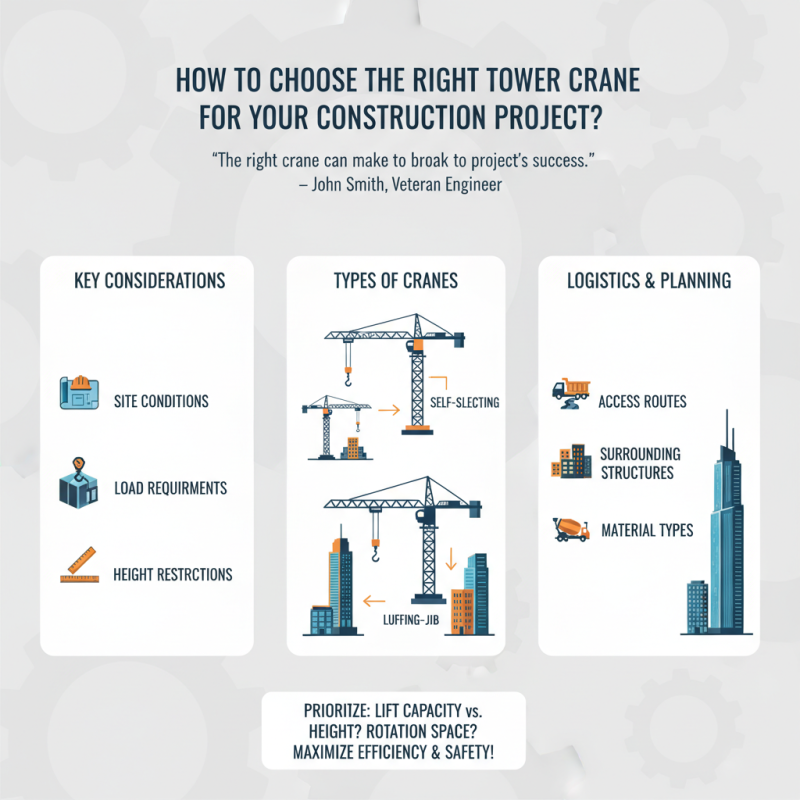
Choosing the right Tower Crane for a construction project can significantly impact efficiency and safety. According to John Smith, a veteran engineer in the Tower Crane industry, "The right crane can make or break a project's success." Selecting the appropriate model is more than just a choice of size. It involves understanding the specific needs of your project, including site conditions, load requirements, and height restrictions.
Tower Cranes come in various types, each designed for specific tasks. It's crucial to evaluate your project's logistics carefully. Factors such as access routes, surrounding structures, and the type of materials being lifted should guide your decision. An expert's insight can help navigate these considerations, as choosing the wrong model can lead to delays and increased costs.
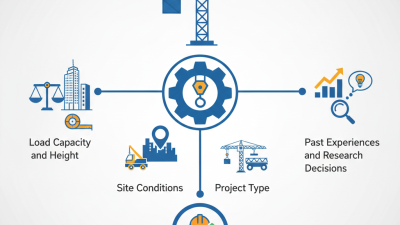
Many factors need reflection during this selection process. Are you prioritizing lifting capacity or height? Do you have adequate space for the crane's rotation? Recognizing these details can lead to a more effective strategy for your construction project. This may seem straightforward, yet many overlook these essential elements, leading to missed opportunities for improvement.
Understanding the Different Types of Tower Cranes Available
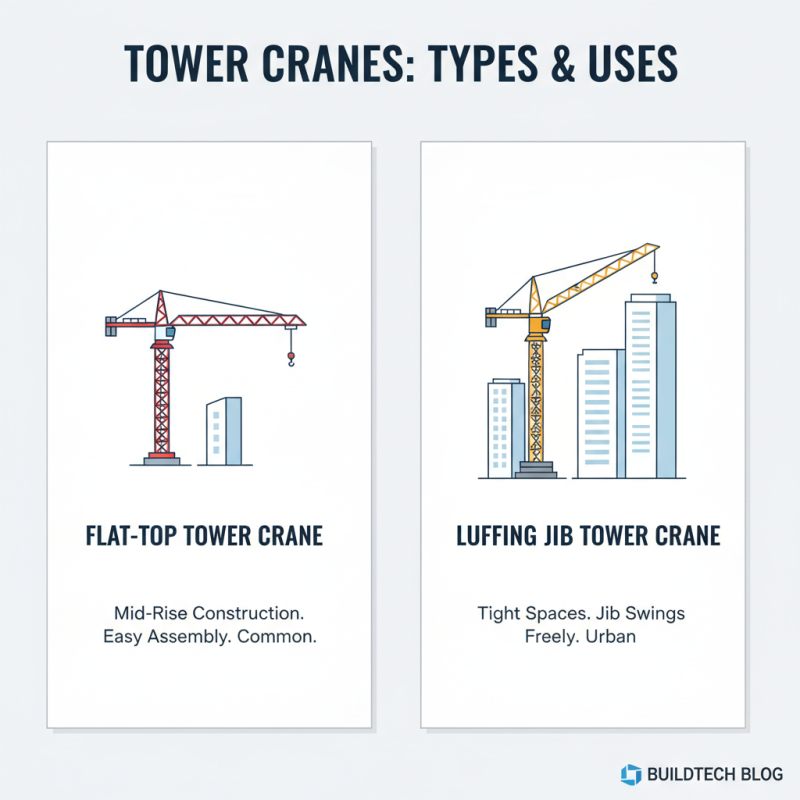
When selecting a tower crane for your construction project, understanding the various types is crucial. There are several main categories of tower cranes, each suited for different functions. The standard flat-top tower crane is commonly used for mid-rise constructions. Its design allows for easy transportation and assembly on-site. Then, there's the luffing jib tower crane. This type excels in tight spaces, as its jib can swing freely without colliding with nearby structures.
Another variant is the hammerhead crane. It's typically used for heavy lifting, ideal for major projects that require robust structural support. Each type comes with specific load capacities and reach distances. Note that choosing the right crane depends not only on the project’s requirements but also on the site's unique conditions.
Careful evaluation of these crane types is essential. Ignoring factors like site layout and lift requirements can lead to complications. It's also important to weigh your choices against the cost of renting or purchasing. A poor selection could result in costly delays or safety hazards. Reflecting on potential scenarios can aid in making a better-informed choice that aligns with your project’s demands.
Evaluating Project Specifications and Requirements for Crane Selection
Choosing the right tower crane involves a careful evaluation of project specifications and requirements. Begin by assessing the height and weight of materials to be lifted. This will determine the crane's capacity and reach. Evaluate the site conditions, such as ground stability and overhead obstacles. These factors can significantly impact crane performance and safety.
Consider the timeline of the project. Some cranes may take longer to set up than others. A quick setup can be crucial for tight schedules. Review the specific tasks the crane will perform. Will it lift heavy materials continuously or occasionally? Understanding operational needs helps in selecting the right model.
Collaboration with experienced engineers is vital. They can provide insights on load charts and crane capabilities. Don't overlook local regulations and safety standards. Compliance is essential to avoid penalties. It can be helpful to seek feedback from past projects. Learning from others’ experiences can aid in making informed decisions. Choosing a crane is not just a technical choice; it requires careful thought and foresight.
Crane Selection Factors for Construction Projects
Key Factors to Consider When Choosing a Tower Crane
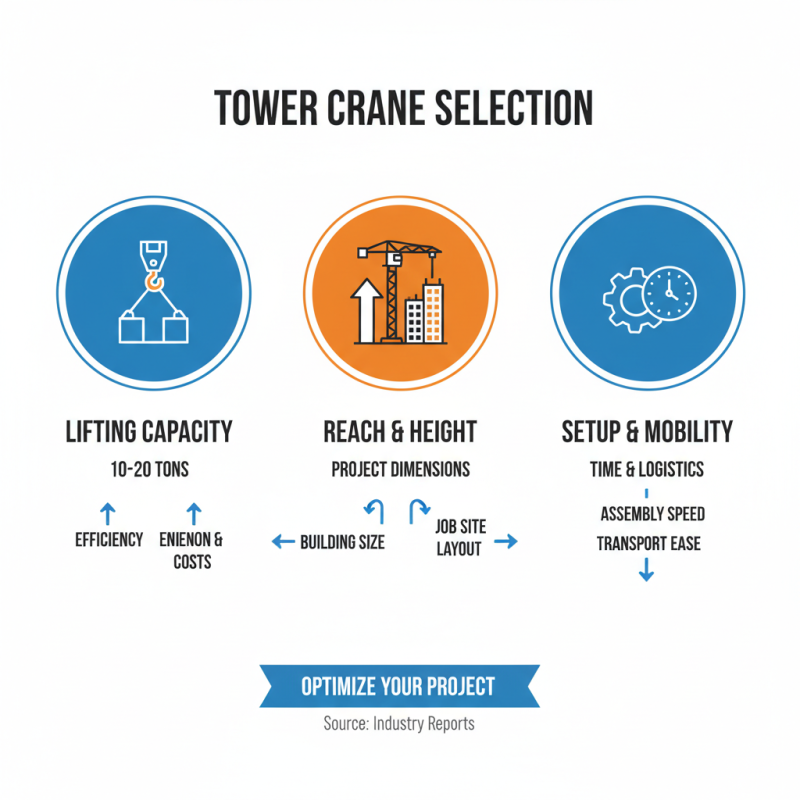
Choosing the right tower crane is crucial for any construction project. Several key factors can significantly influence your selection. First, consider the crane's lifting capacity. Most projects require cranes capable of lifting between 10 to 20 tons. According to industry reports, cranes with a higher capacity offer better efficiency but may come with increased costs.
Height is another critical aspect. The average construction site can vary in height, with buildings often exceeding 200 feet. A crane that adjusts its height can save time and reduce costs. Additionally, reach matters. Cranes commonly extend from 60 to 230 feet. Insufficient reach can stall operations, causing delays.
Safety features should never be overlooked. Industry studies indicate areas with proper safety protocols see a 20% drop in accidents. Features like automatic shutdown systems and load monitoring systems enhance safety. Choosing a crane without these can lead to potential risks. Reflect on these factors. Making an informed choice often involves weighing project needs against safety and efficiency.
Assessing Site Conditions and Accessibility for Crane Operation
When selecting a tower crane, site conditions and accessibility play critical roles. Understanding the terrain helps in determining the crane's lifting capacity and reach. For instance, uneven ground can necessitate additional stabilization methods to ensure safety. In a survey by the Cranе Safety Council, 45% of site accidents are linked to improper crane setup related to site conditions. This statistic underscores the importance of careful evaluation.
Accessibility also impacts the crane's operation. Narrow spaces limit the size and type of crane that can be used. Additionally, overhead obstacles can create challenges. According to a report by the American Society of Civil Engineers, over 30% of construction delays occur due to accessibility issues. It’s essential to evaluate crane routes, potential obstructions, and delivery logistics before making a decision.
Having a knowledgeable team on-site can further enhance the crane's effectiveness. A skilled operator will assess environmental factors continuously. For example, wind speed can significantly affect a crane’s stability. Neglecting such details can result in accidents. Moreover, investing in thorough site analysis can prevent costly mistakes, ensuring the project remains on schedule and within budget.
Budget Considerations and Cost Analysis for Crane Rentals or Purchases
When planning a construction project, budgeting for tower crane rentals or purchases is critical. According to industry reports, rental costs typically range from $10,000 to $30,000 per month, depending on the crane type and project duration. For many, rentals are the preferred choice due to lower upfront costs. However, long-term projects can make purchasing more economical.
Consider maintenance costs as a hidden expense. Reports indicate that maintenance can add up to 15-20% of the total rental costs annually. A poorly maintained crane can lead to safety risks and costly delays. Allocating funds for regular inspections ensures reliability.
Additionally, assess the crane's load capacity and height. This often directly impacts costs and efficiency. Cranes with higher capacities or specialized features come with a premium. Make informed decisions. Balancing between short-term savings and long-term investment is key for sustainable project success.
How to Choose the Right Tower Crane for Your Construction Project? - Budget Considerations and Cost Analysis for Crane Rentals or Purchases
| Crane Type |
Rental Cost (per month) |
Purchase Cost |
Capacity (tons) |
Height (meters) |
Swing Radius (meters) |
| Luffing Jib Crane |
$8,000 |
$150,000 |
10 |
50 |
30 |
| Flat Top Crane |
$7,500 |
$130,000 |
8 |
45 |
25 |
| Hammerhead Crane |
$9,000 |
$160,000 |
12 |
55 |
35 |
| Railway Crane |
$6,500 |
$100,000 |
15 |
40 |
20 |