How to Choose the Right Construction Crane for Your Project?
Choosing the right construction crane is crucial for any project’s success. According to John Smith, a well-known expert in the construction crane industry, “Selecting the right crane can make or break your project.” This statement highlights the impact of making a careful choice.
Construction cranes come in various types, each designed for specific tasks. It’s important to consider the height and weight capacities. A thorough understanding of your project needs is essential. Misjudgments can lead to accidents or delays. Not every crane suits every project. Assessing your site’s layout is necessary.
Moreover, crane selection is often overlooked, leading to potential issues. A basic understanding of crane specifications is vital. Many people do not realize the value this knowledge brings. Reflecting on past projects, the right choice can prevent costly mistakes. Balancing cost and functionality is a challenge many face. Ultimately, the decision influences overall efficiency and safety on-site.

Understanding the Different Types of Construction Cranes Available
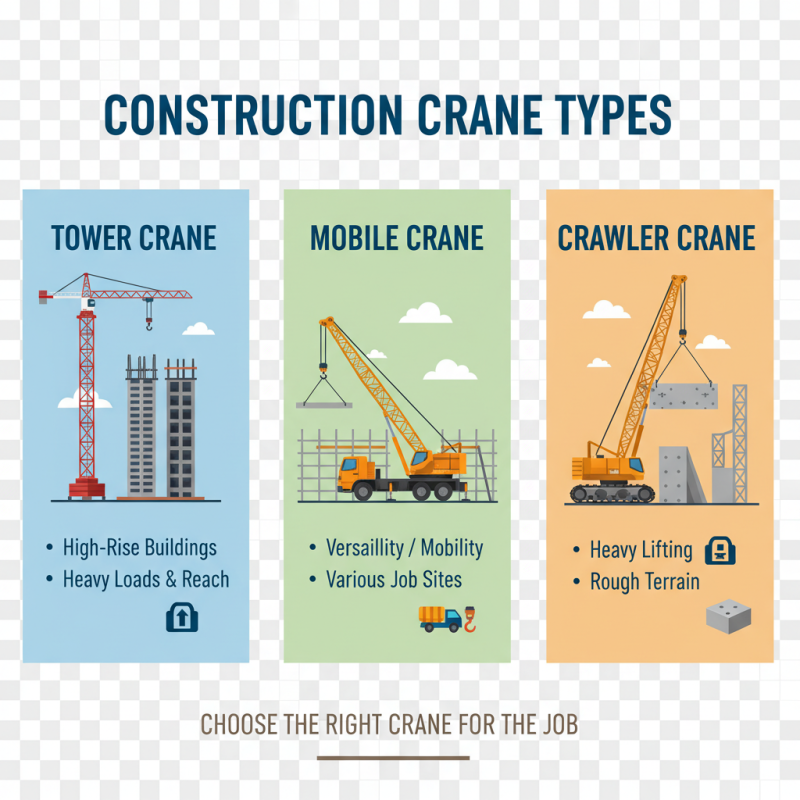
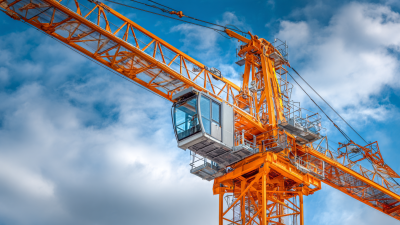
When choosing a construction crane, understanding the different types available is crucial. There are several cranes designed for specific tasks. Tower cranes are tall and ideal for high-rise buildings. They offer great reach and can lift heavy materials with ease. However, they require a significant amount of space and proper ground conditions.
Mobile cranes are another popular choice. They are versatile and can be moved easily from one site to another. Their ability to navigate varying terrains is a plus. But, the lifting capacity may be less than that of tower cranes. Then there are crawler cranes, which are perfect for rough and uneven ground. They provide stability but can be costly to transport.
Evaluating your project's unique needs is necessary. Consider the weight of materials, site layout, and project duration. An ill-suited crane choice can lead to delays and increased costs. Reflecting on the project's requirements can prevent missteps in crane selection. Understanding these details helps in making an informed decision.
Evaluating Load Capacity and Reach Requirements for Your Project
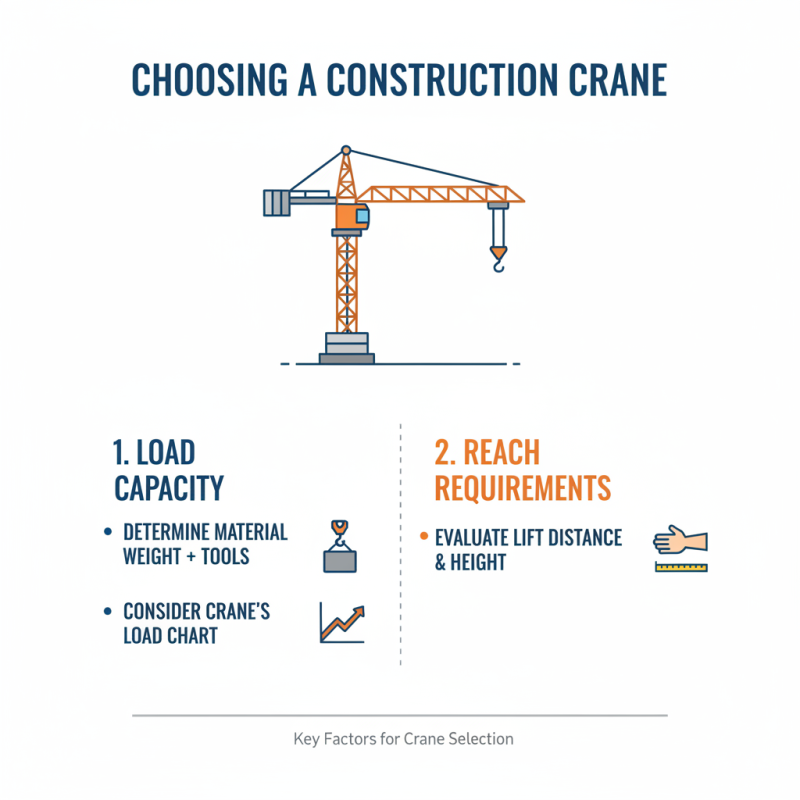
When choosing a construction crane, evaluating load capacity and reach requirements is crucial. Start by determining the weight of the materials you will lift. This includes not only the items' weight but also any additional tools that might be used. Consider the crane’s load chart. Each crane has different limits based on its design.
Tip: Always add a safety margin. If your load is close to the maximum weight, opt for a crane with higher capacity.
Next, analyze the reach required for your project. If you work in tight spaces, you may need a crane with a shorter boom. However, wider spreads might be necessary for larger sites. Consider where the crane will set up and how it will reach the materials.
Tip: Sketch a layout of your site. This will help visualize necessary reach and potential obstacles.
Reflect on all these considerations to ensure a prudent choice. It’s not uncommon to miscalculate requirements. Prioritize safety and efficiency in your decision-making process.
Considering Site Conditions and Accessibility for Crane Operation
When selecting a construction crane, site conditions and accessibility are crucial. Each project site presents unique challenges. A 2021 report by the Crane Safety Council noted that approximately 30% of crane accidents are linked to poor site conditions. These factors often include ground stability, overhead obstacles, and tight spaces. Understanding your site will help you choose a crane that meets safety and operational standards.
Tip: Assess ground conditions early. Soft or uneven ground can destabilize cranes. Conduct soil tests and check for underground utilities before crane arrival.
Accessibility also plays a significant role in crane selection. If your site is difficult to access, you may require a more mobile crane. A study indicated that 40% of construction delays stem from accessibility issues. Cranes need room to maneuver and operate efficiently. Narrow streets or overhead lines can complicate operations.
Tip: Create a clear site map. Identify all entry points and obstacles. This map will aid in choosing the correct type of crane for your project.
Reflecting on these aspects helps in avoiding costly mistakes. Don’t overlook site conditions and accessibility when planning your project. Each detail counts to ensure safety and efficiency.
Crane Type Suitability Based on Site Conditions
Budgeting for Crane Rental or Purchase: What to Factor In
Budgeting for crane rental or purchase is crucial for any construction project. Start by determining your project size and scope. The overall budget should include rental fees, transportation costs, and operator wages. It's essential to be realistic about these expenses. Sometimes, overlooked details lead to budget overruns.
Next, consider the duration of the project. Will you need the crane for a week or several months? A longer rental could be more cost-effective than multiple short-term rentals. Also, factor in maintenance and fuel costs. These can add up quickly, affecting your budget. Make sure you have a clear understanding of these expenses.
Finally, don't forget about insurance and permits. They play a key role in your overall cost. Review safety requirements and ensure you have adequate coverage. Overlooking these aspects can lead to unexpected setbacks and additional costs. It’s better to plan thoroughly upfront than to face issues later on.
Safety Regulations and Certification Requirements for Crane Use
When selecting a crane for construction, understanding safety regulations is crucial. Each country has specific standards that govern crane operations. For instance, OSHA in the U.S. mandates that all cranes undergo regular inspections. These inspections can reveal mechanical issues that may compromise safety on job sites.
Certification requirements also play a significant role. Operators must be certified to handle cranes safely. According to the National Commission for the Certification of Crane Operators (NCCCO), having certified operators reduces accidents by approximately 30%. Not having compliant personnel can lead to costly delays and unsafe working conditions.
Moreover, adhering to guidelines can be challenging. Many sites overlook necessary documentation or fail to train personnel adequately. According to industry reports, around 25% of construction accidents in the U.S. involve cranes. Many of these incidents stem from improper use or lack of safety measures. Investing time in training and ensuring compliance can help mitigate these risks.